Start with two numbers
How many hens, and how often you want to move the coop. Those two answers narrow the range to two or three, and everything else — material, roof, nesting boxes — is preference. Work from about 4 sq ft of coop floor per standard hen, plus 8–10 sq ft of run per hen, and buy for the flock you'll have in a year rather than the one arriving next month. Hens are famously habit-forming.
Assume a build. Flat-packed cartons are the norm in this category, so plan on a few hours and a second pair of hands. Where the manufacturer states how a coop ships, the listing says so; where it doesn't, ask us and we'll get it confirmed before you order.
Question 1 — how many hens?
| Hens | What you're looking for | Start here |
|---|---|---|
| 2–4 | Small footprint, light enough to move alone, one nesting box is plenty | Portable chicken coops |
| 4–6 | The most common backyard flock. Wheels and a handle matter more here — the coop is heavier | Mobile chicken coops |
| 6–10 | Long runs, two or more nesting boxes, and a real conversation about weight | Large chicken coops |
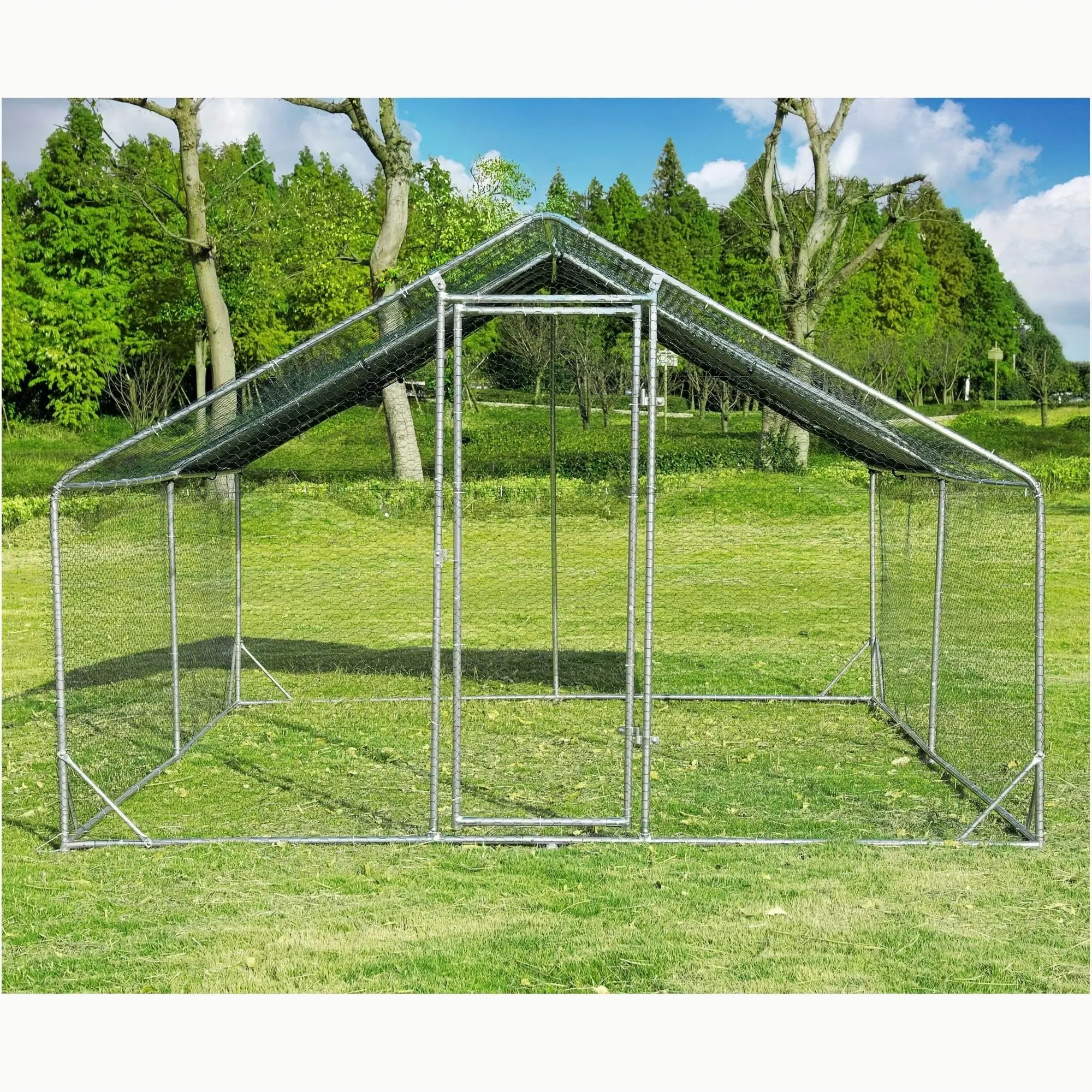
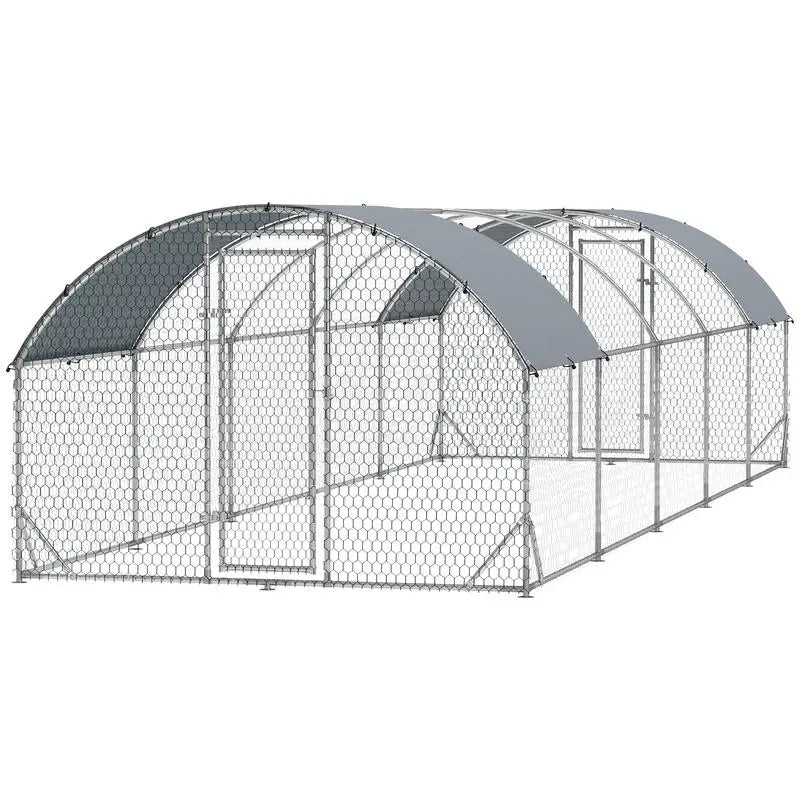
| 10+, or you want to stand up inside | Walk-in height, steel frame, cleaning you can do without kneeling | Walk-in chicken coops |
2–4 hens
A first flock, a small yard, or a couple of hens for the eggs. You want something one adult can reposition without planning the afternoon around it. The trap at this size is buying a coop sized for two hens because you're getting two hens — flocks grow.
Browse: Portable chicken coops · Chicken coops with runs
Two we'd point you at:
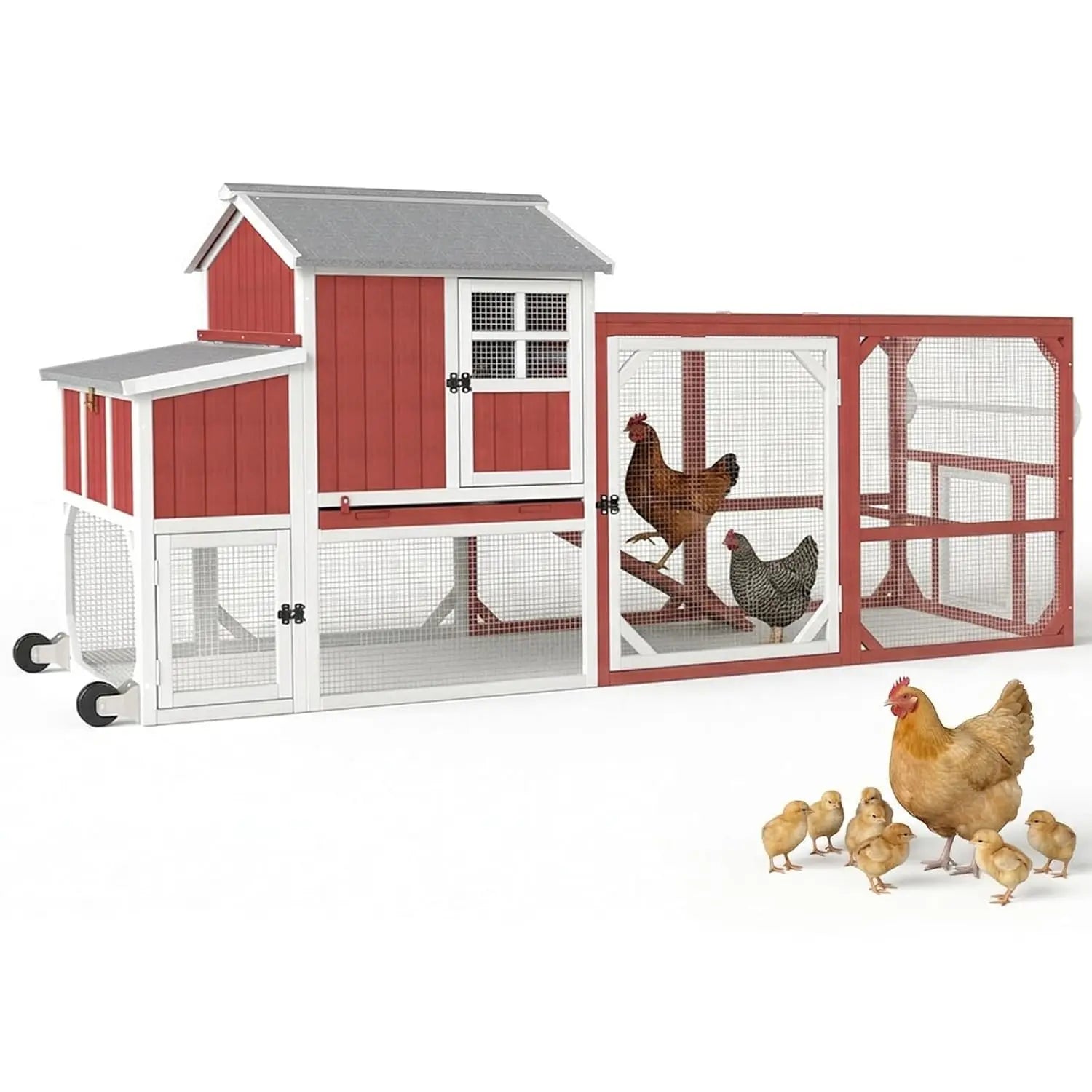
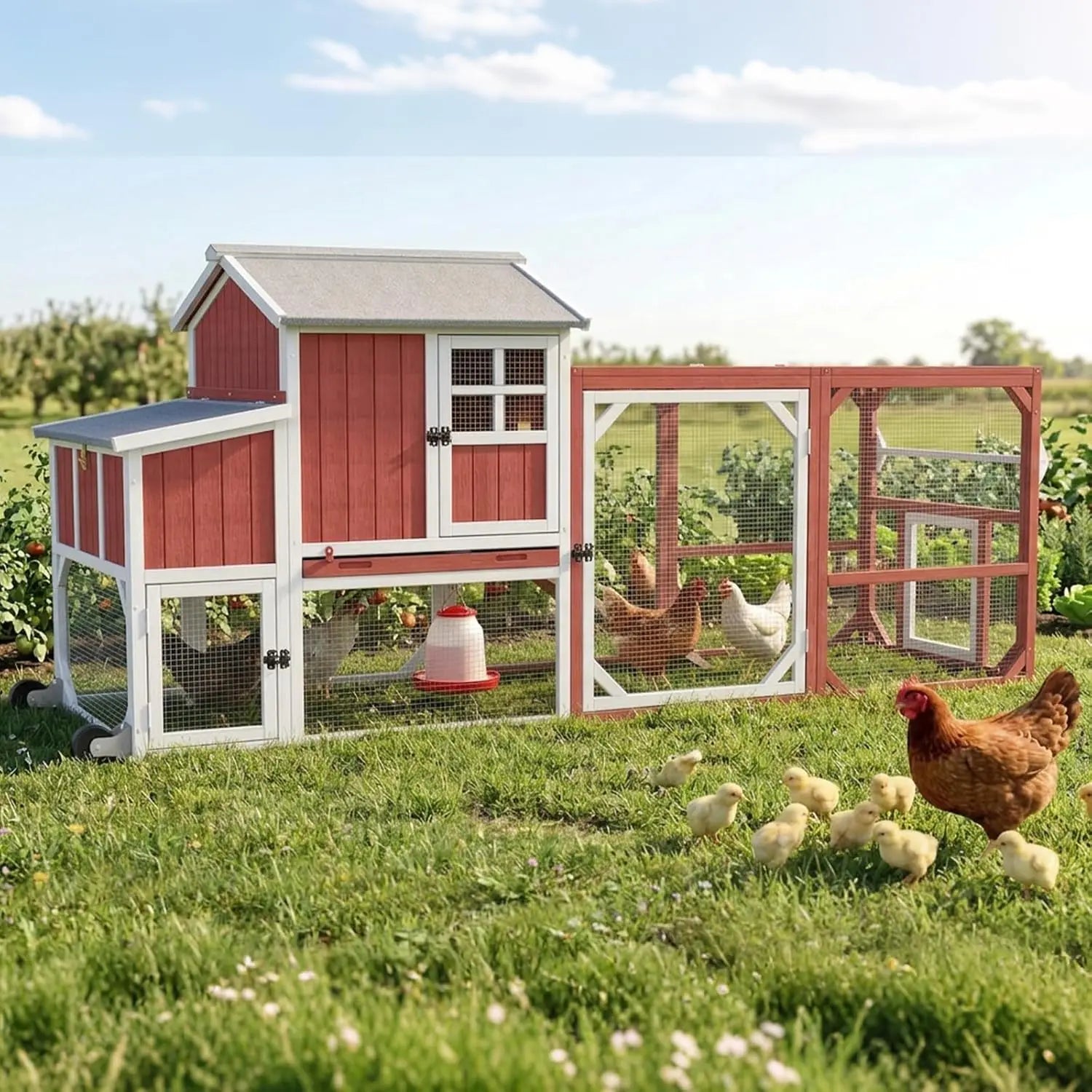
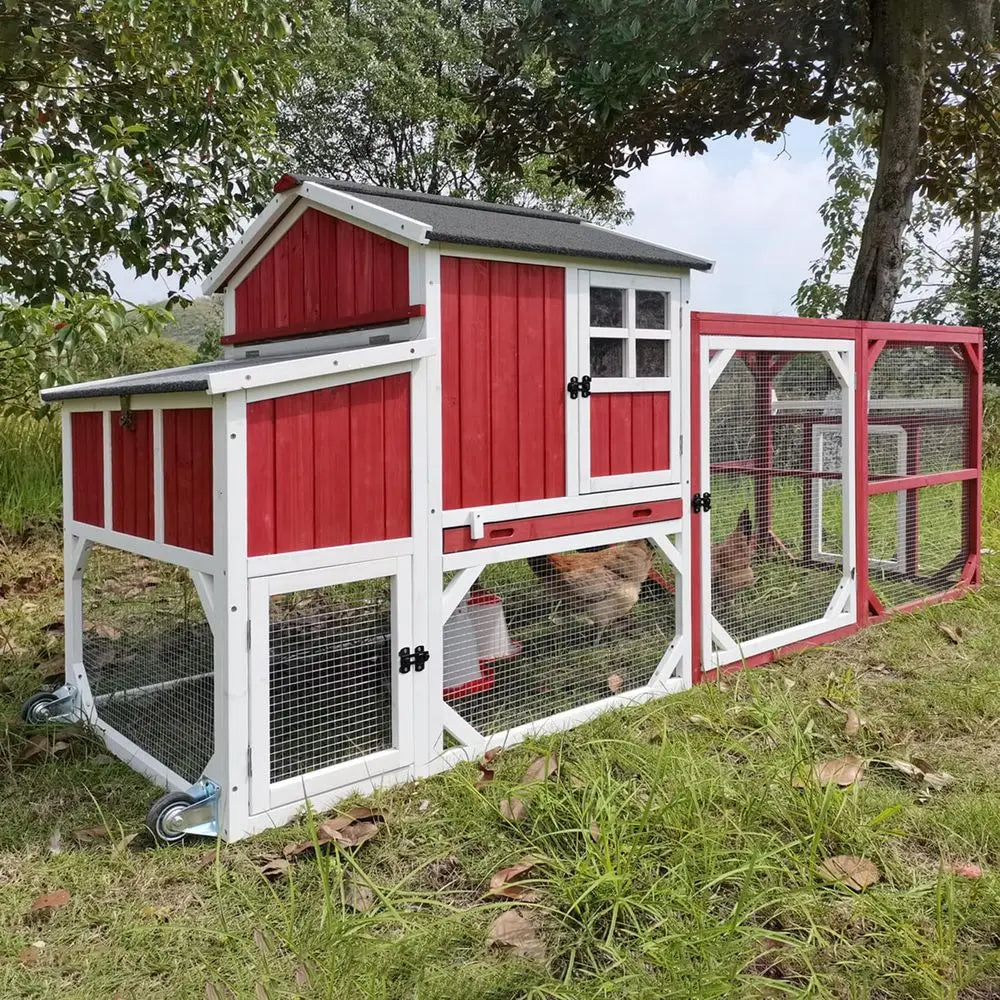
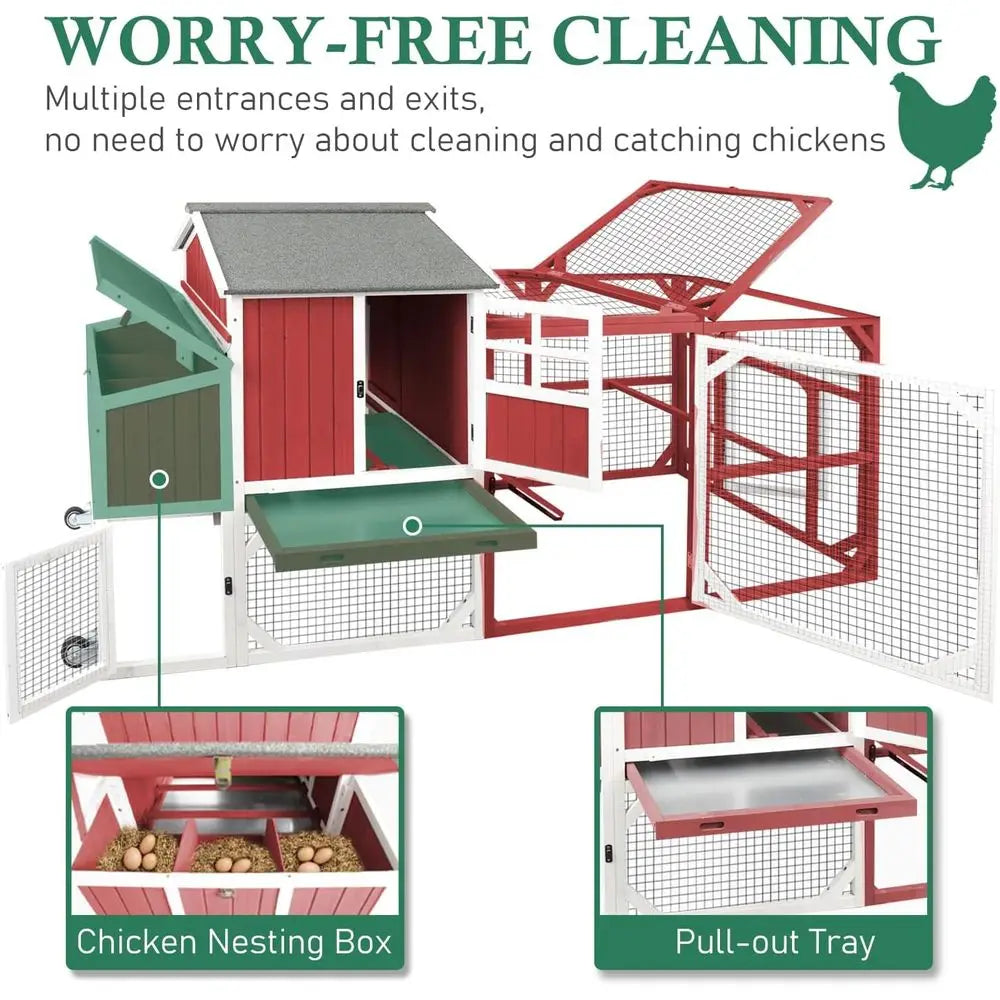
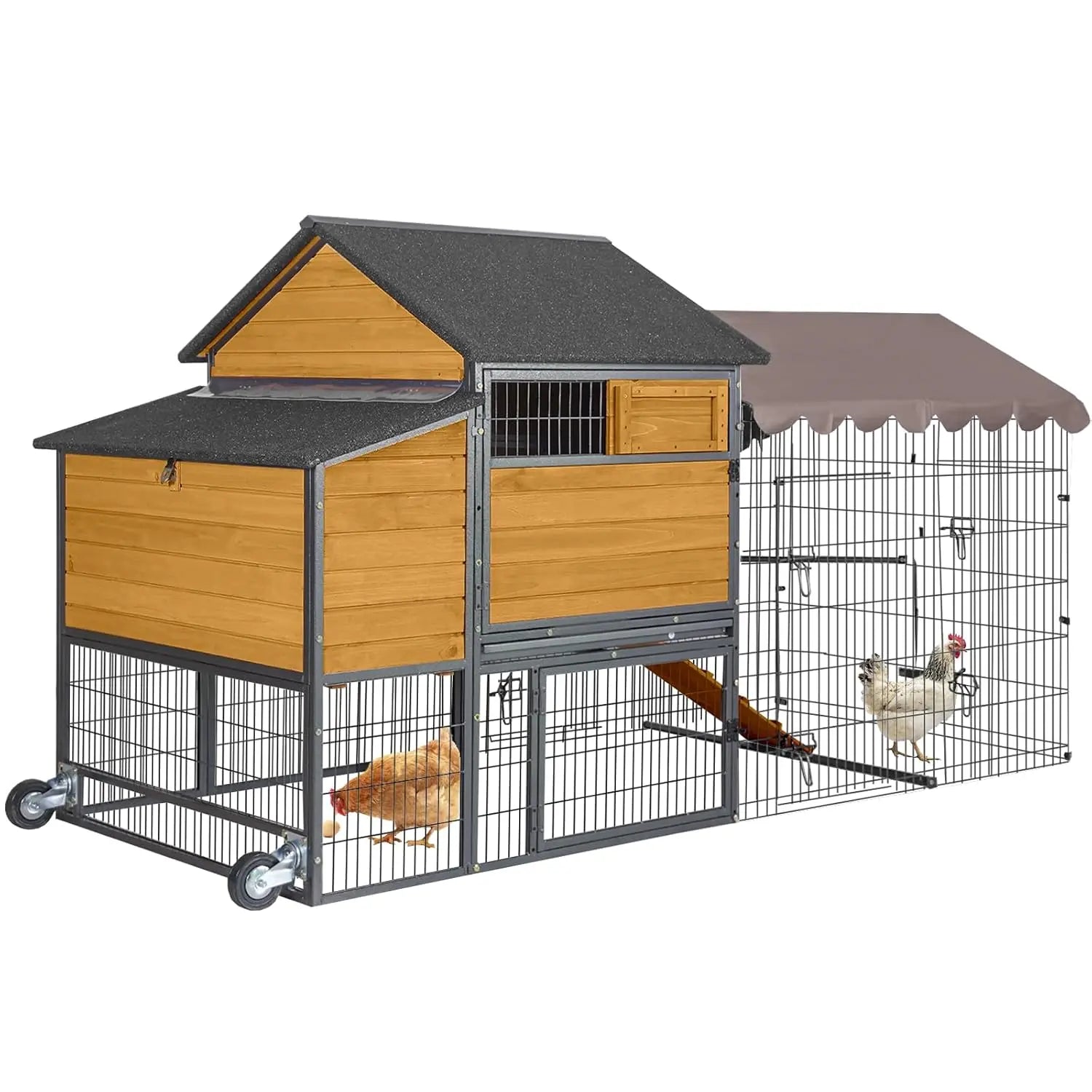
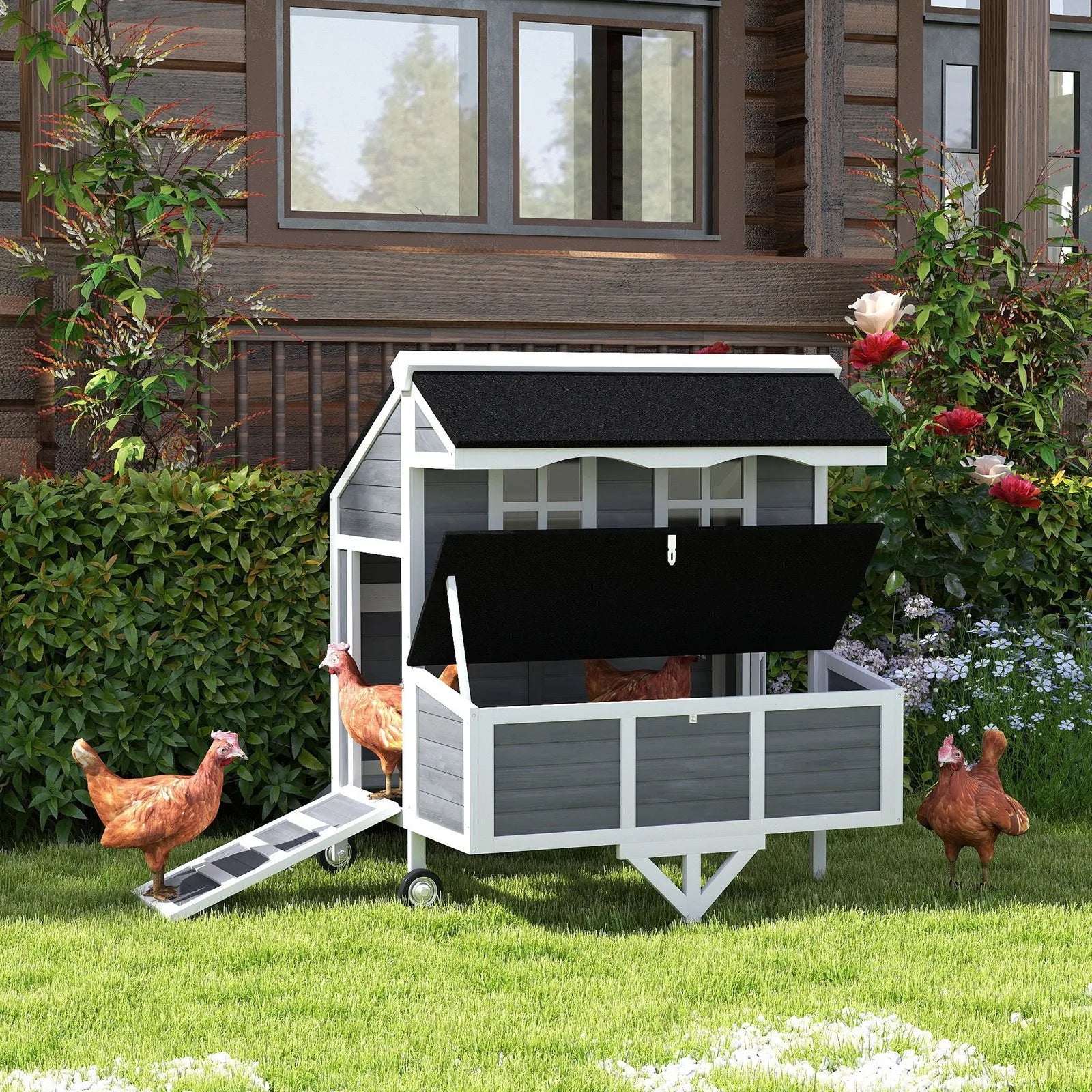
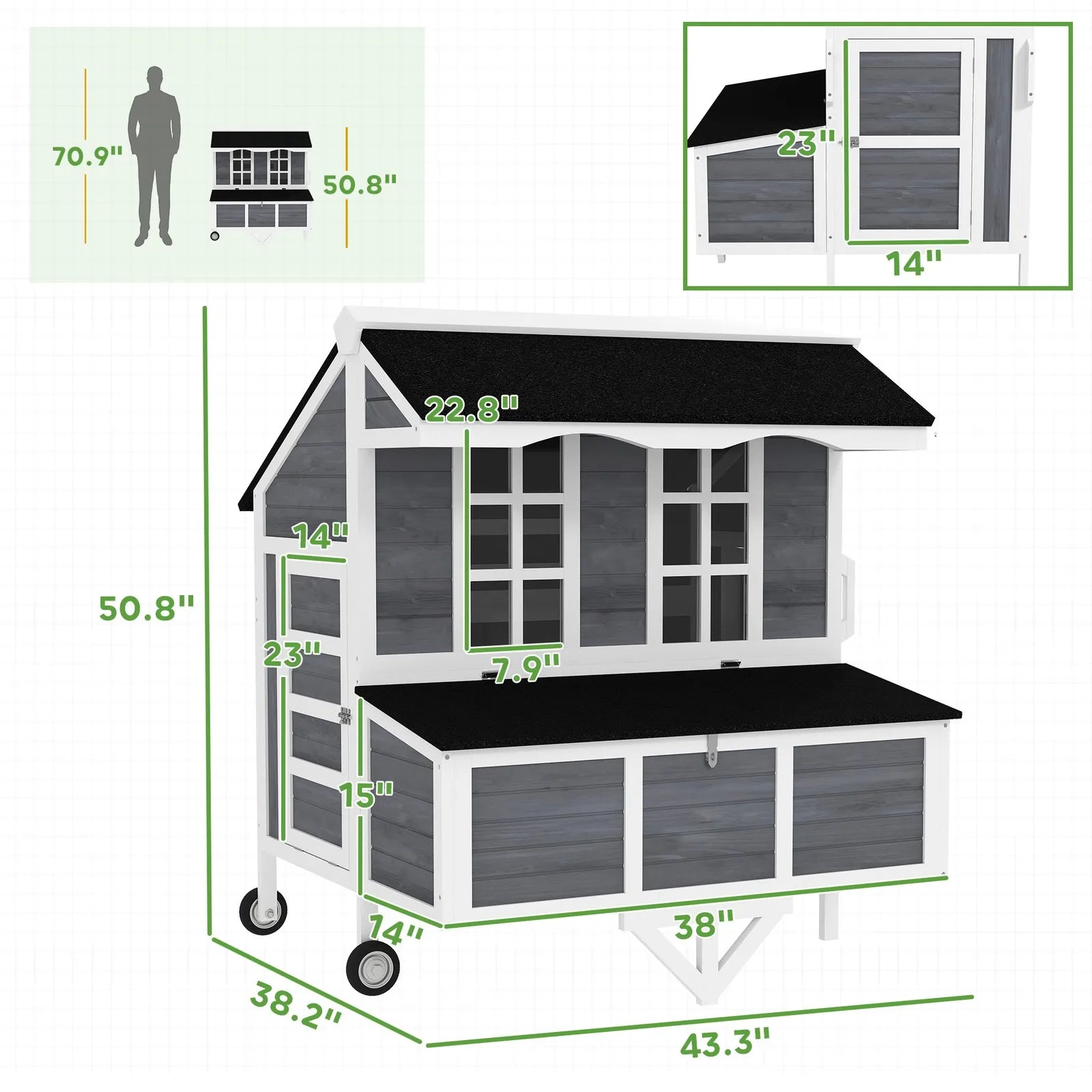
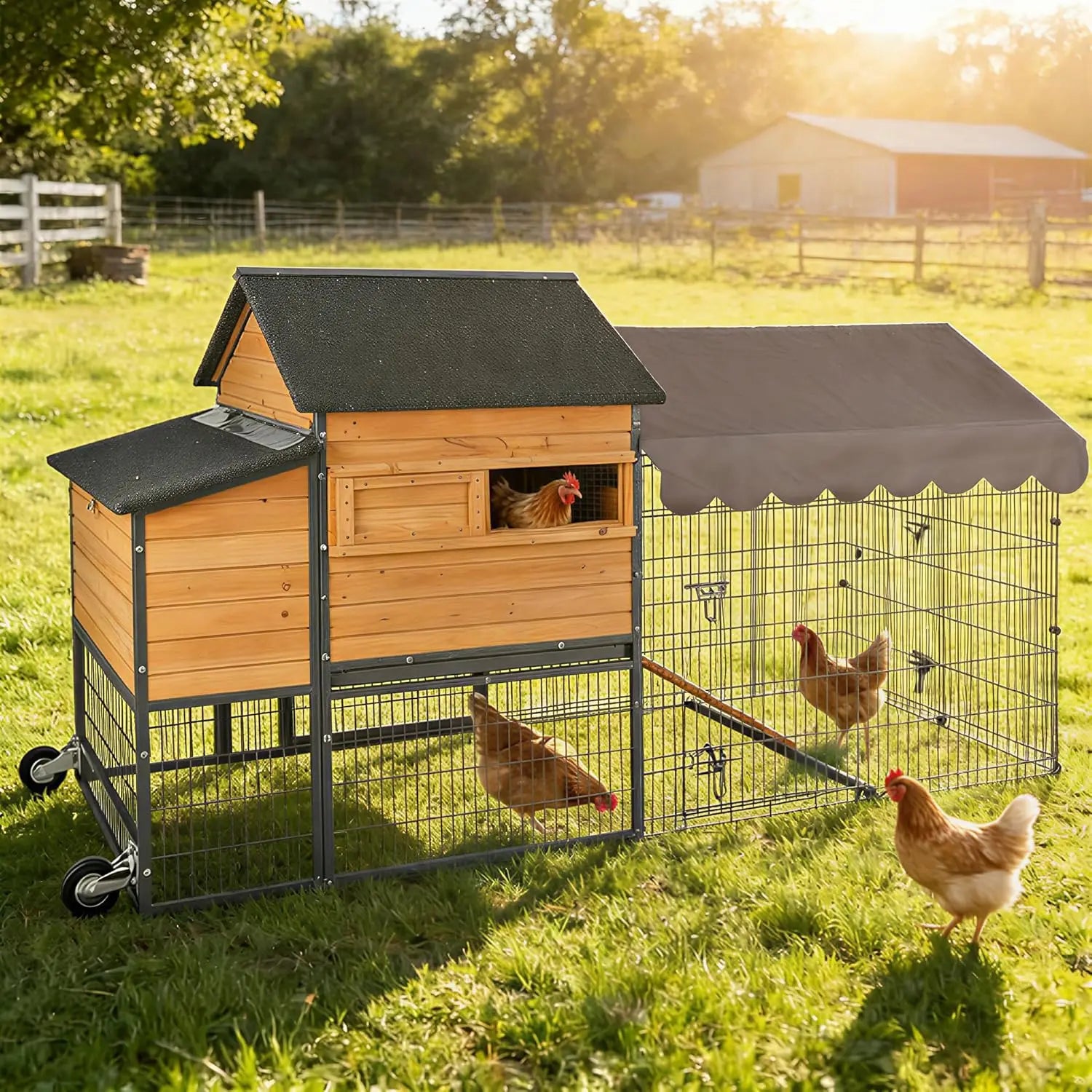
- 43" chicken tractor with wheels — fits 2–4 hens — two wheels and handles, a nesting box with latches, three perches, a pull-out tray, and a transparent window. Fir frame with a weather-resistant finish and an asphalt roof. A compact footprint on two wheels, which is what this bracket is about.
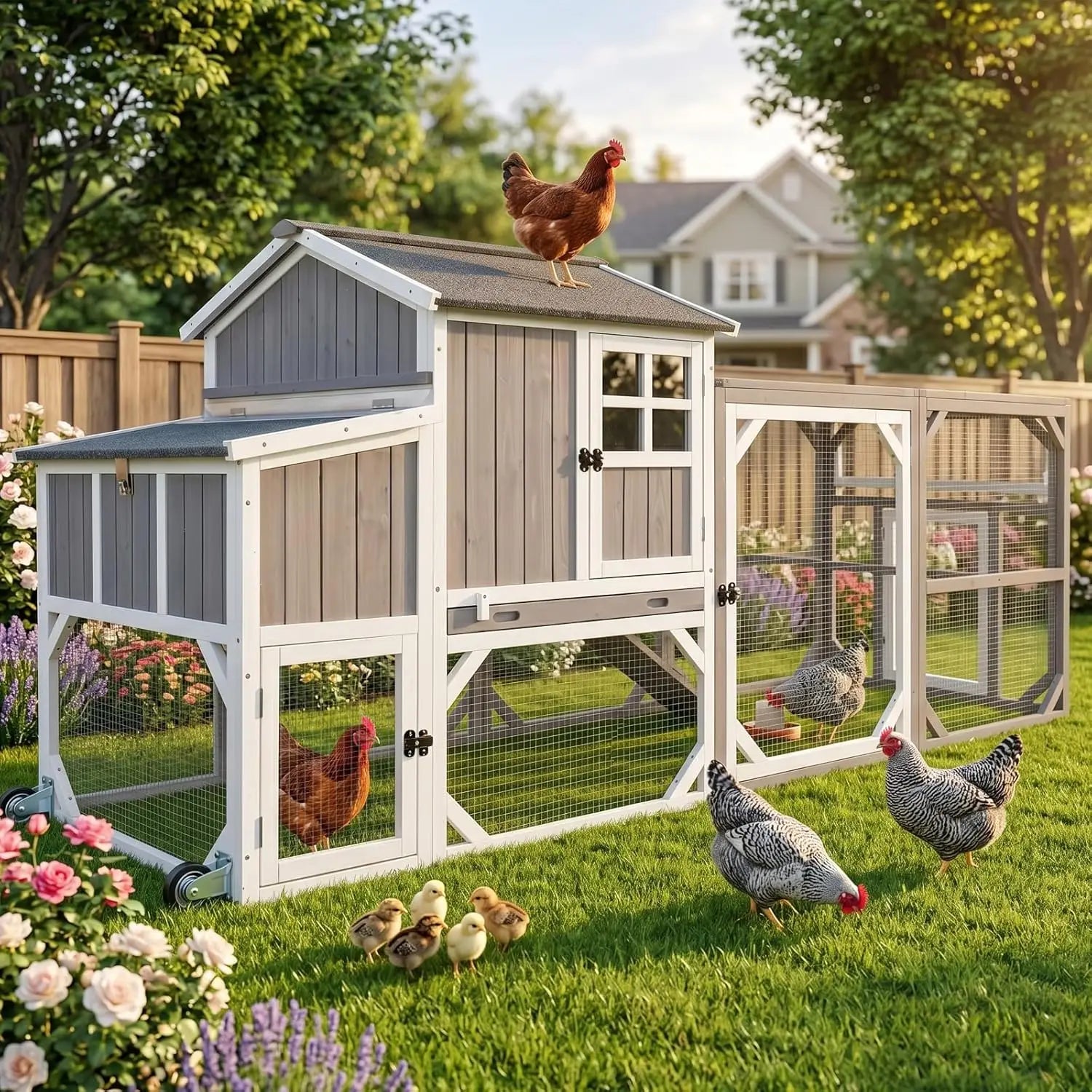
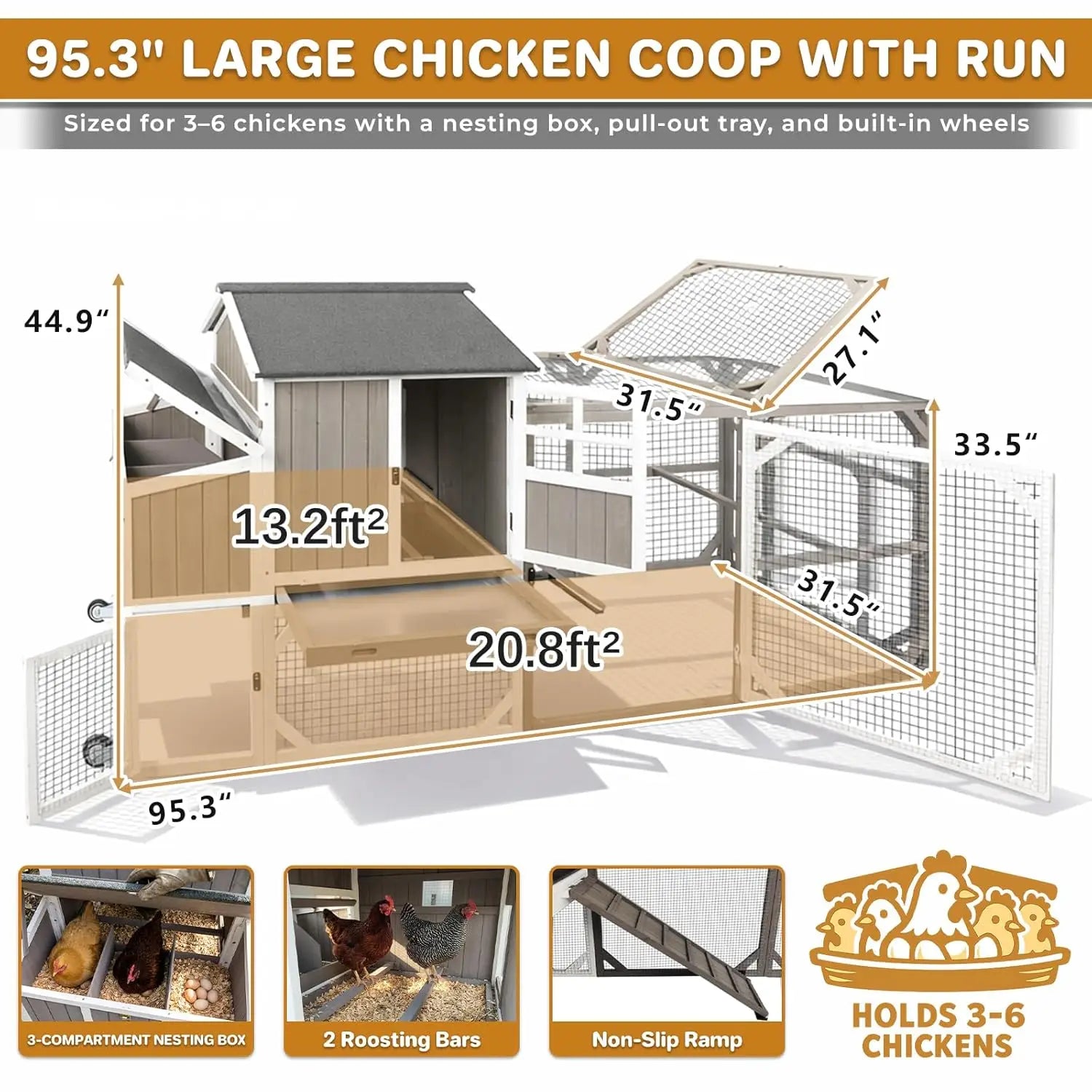
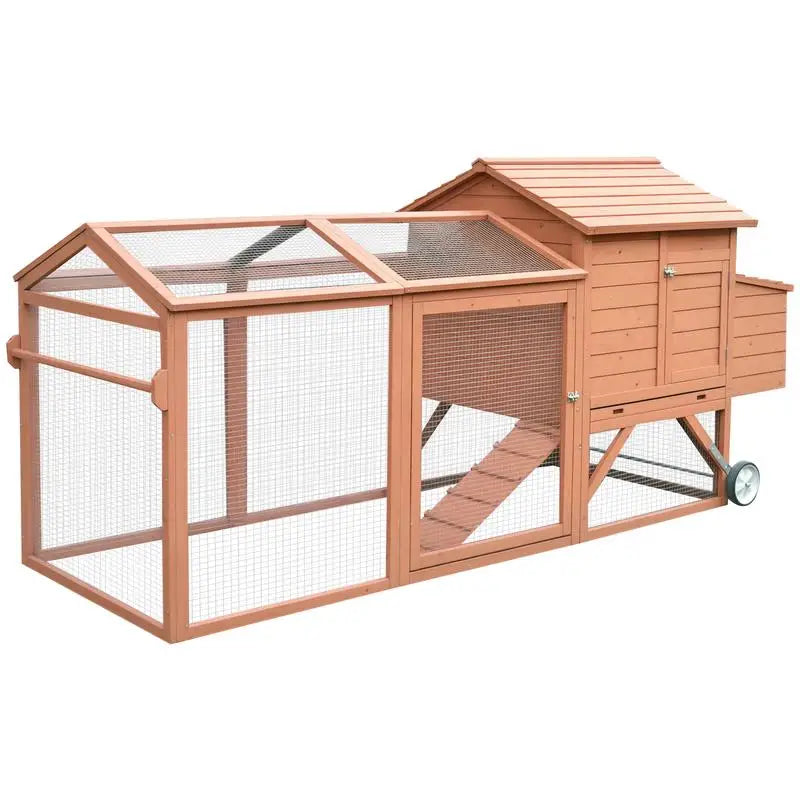
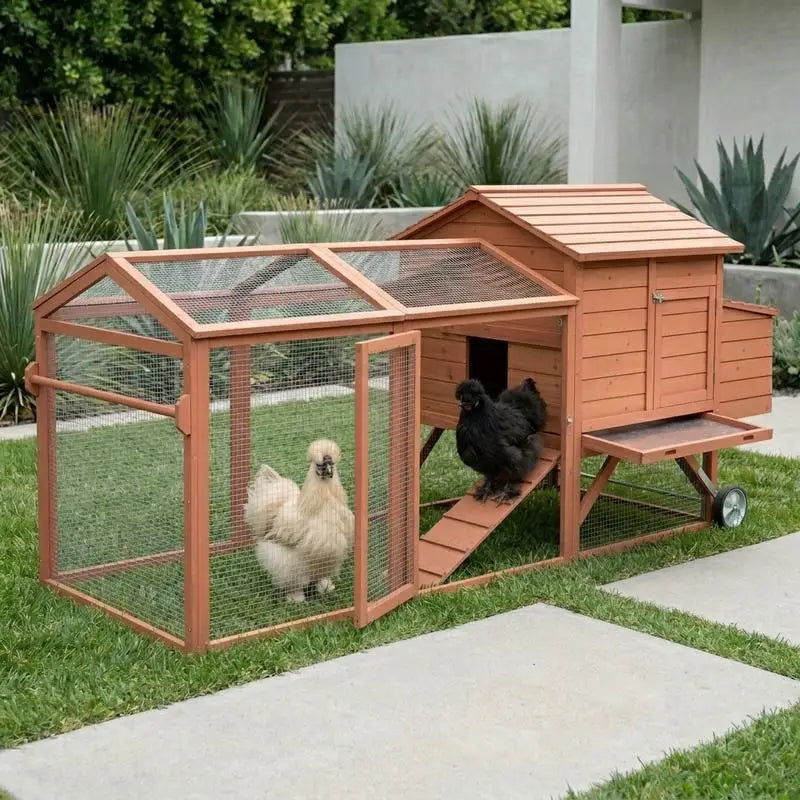
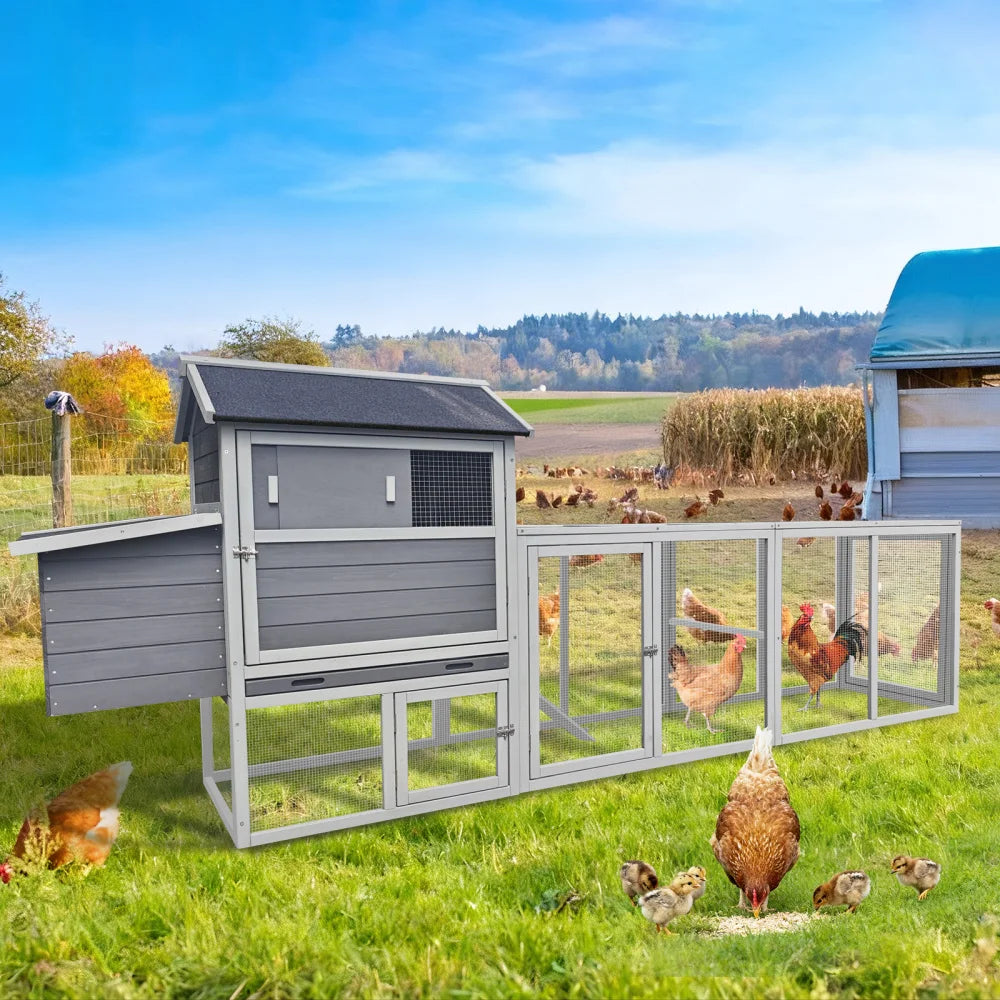
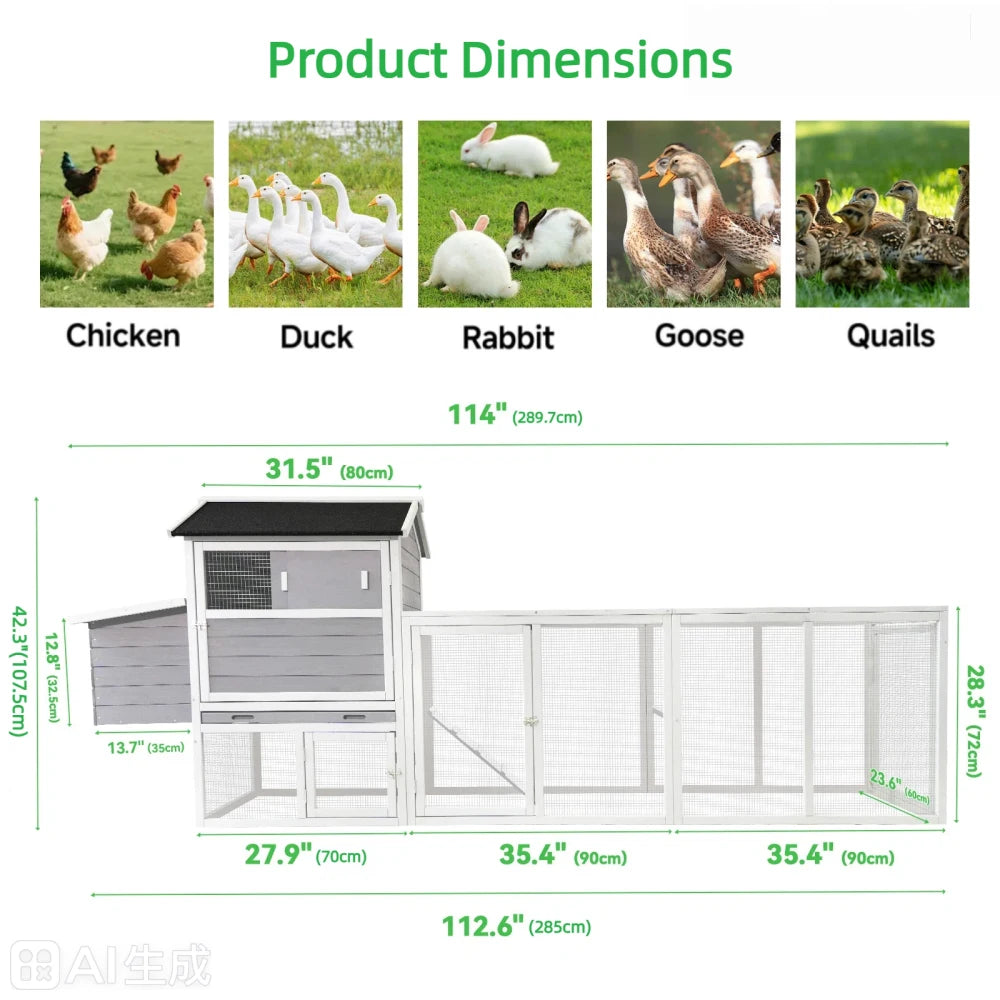
- 95" portable chicken coop with run — the manufacturer rates it for 2–4 hens, and the extra length goes into run space rather than more birds. Three nesting boxes and a removable tray.
Just two hens, and not moving it? Small wooden chicken coop for 2 chickens is the entry point — two nesting boxes, no wheels.
4–6 hens
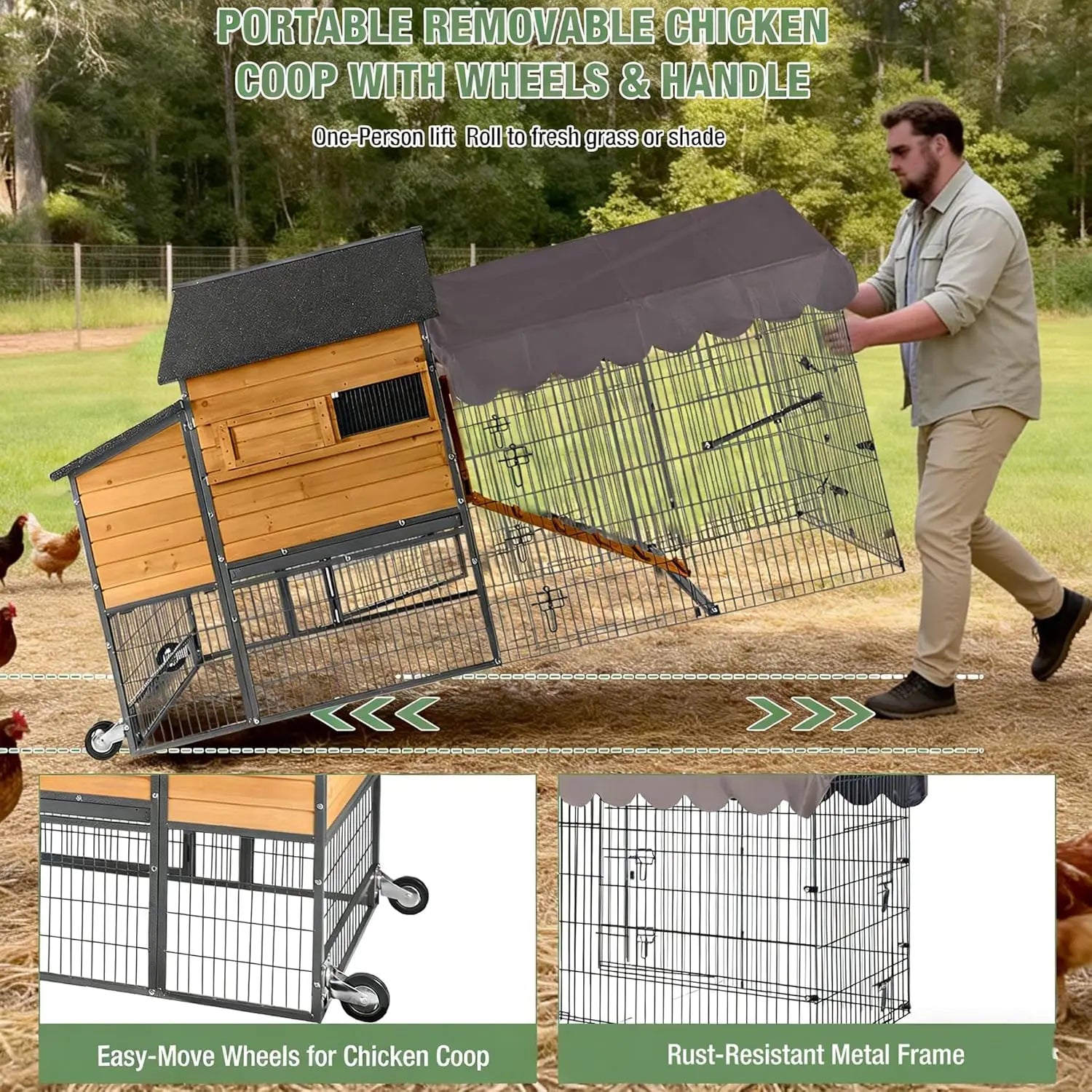
The standard backyard flock, and the size most of this category is built around. At this size the coop is heavy enough that wheel diameter and handle position stop being details. Check the Mobility Spec block on each page: it carries the wheels, and the handle and ground clearance where the manufacturer states them, and stays quiet where they state nothing.
Browse: Mobile chicken coops · Chicken tractors
Two we'd point you at:
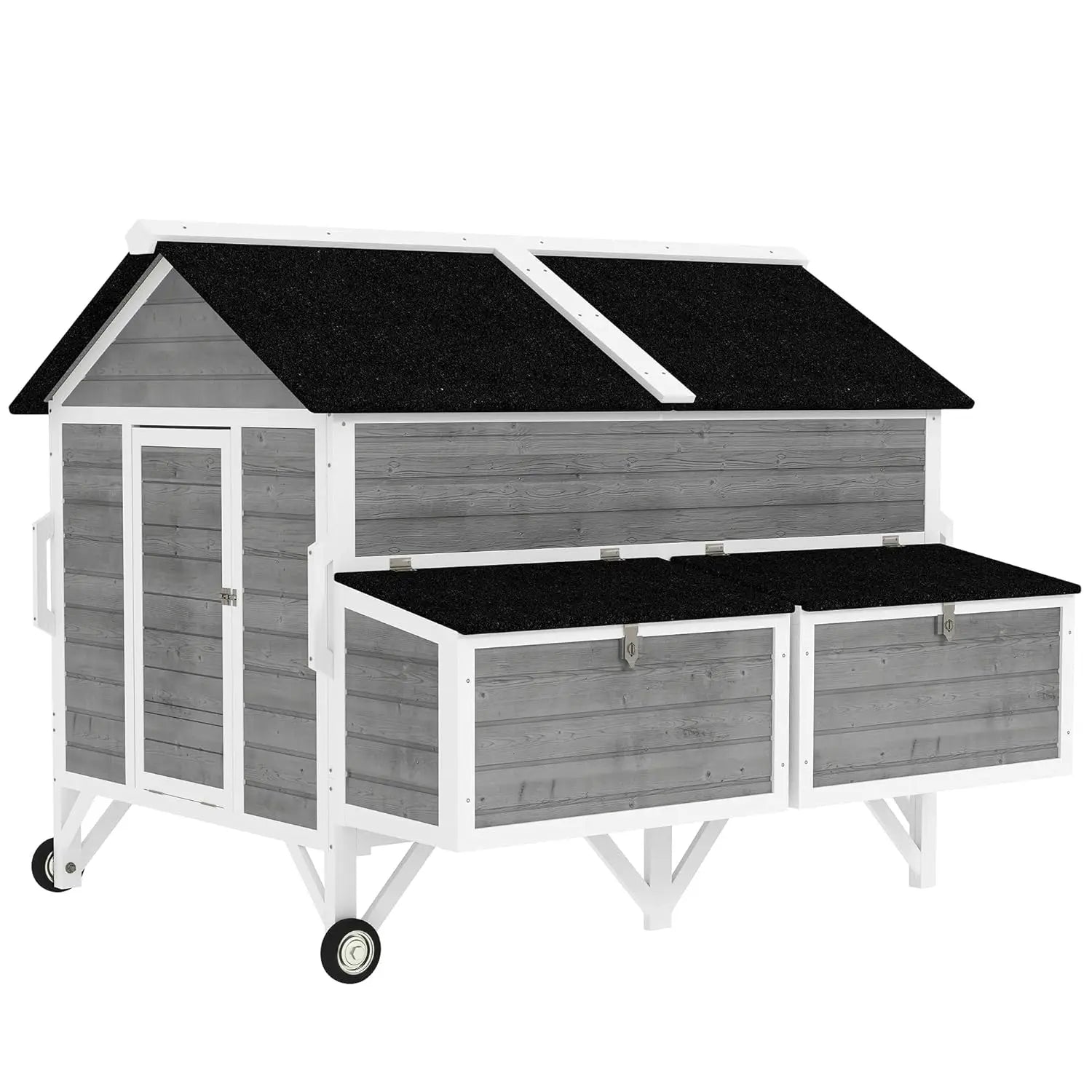
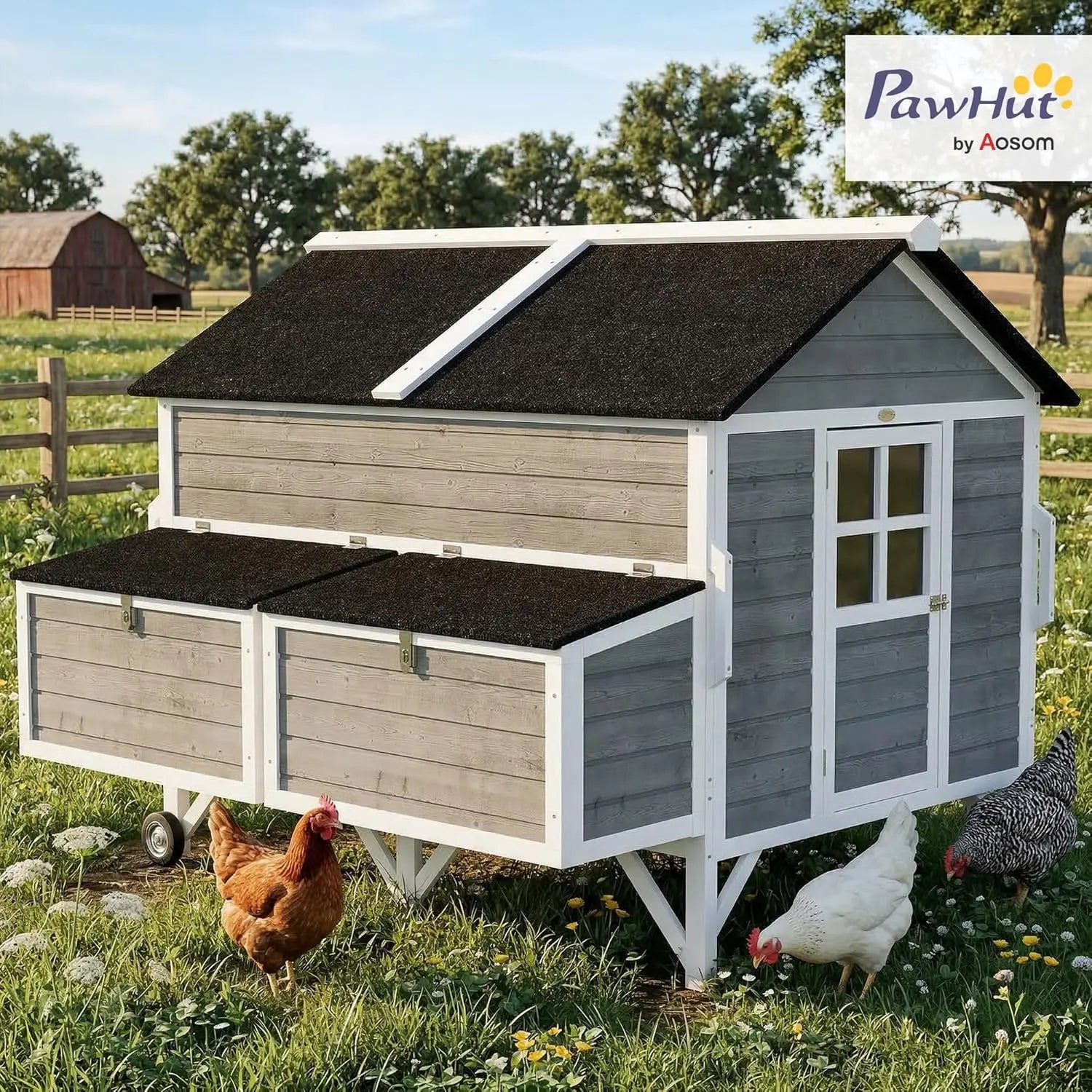
- PawHut 59" wooden chicken tractor — rated by PawHut for 4–6 hens, with wheels, handles, two nesting boxes, two trays and four perches. A named brand, which means published specs and available parts.
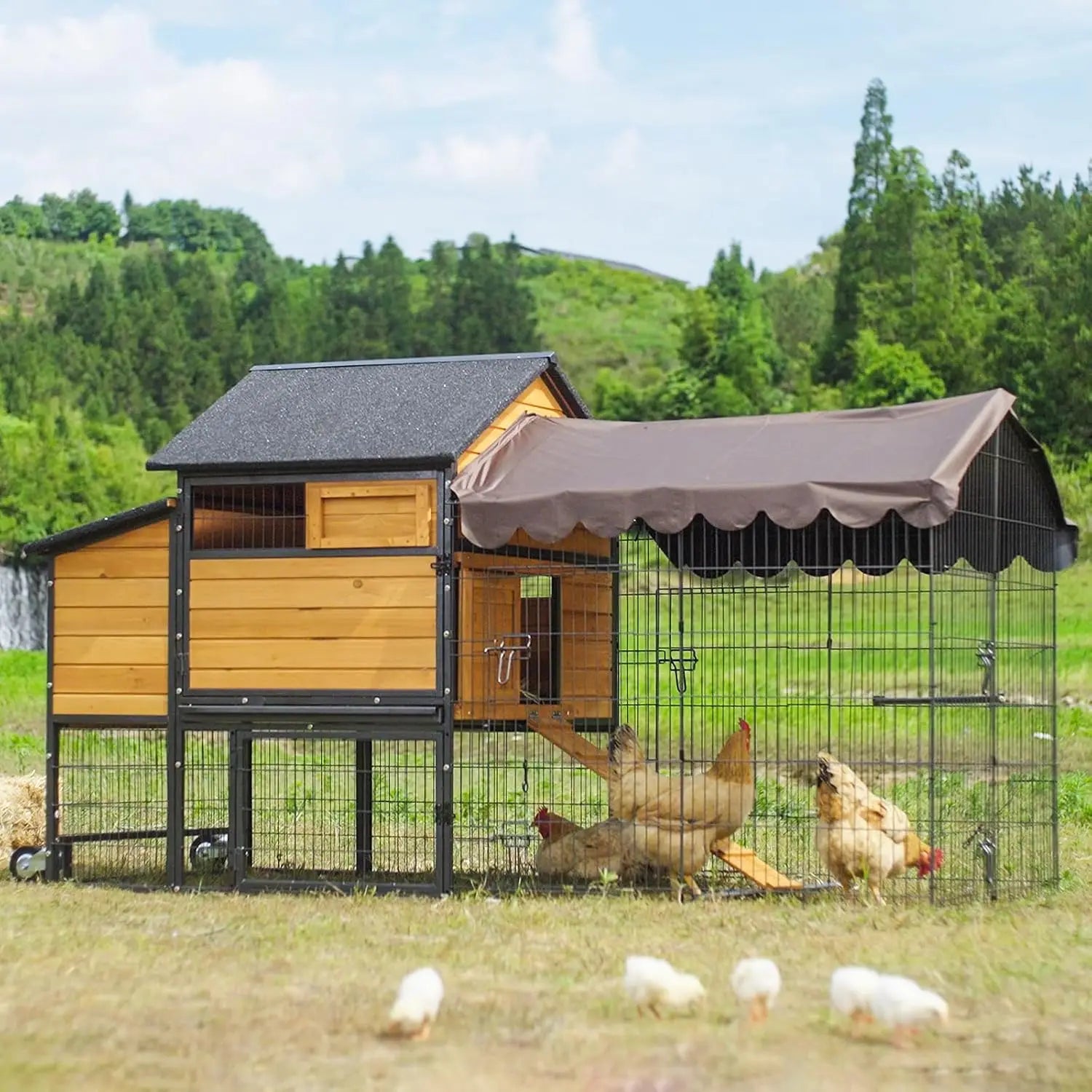
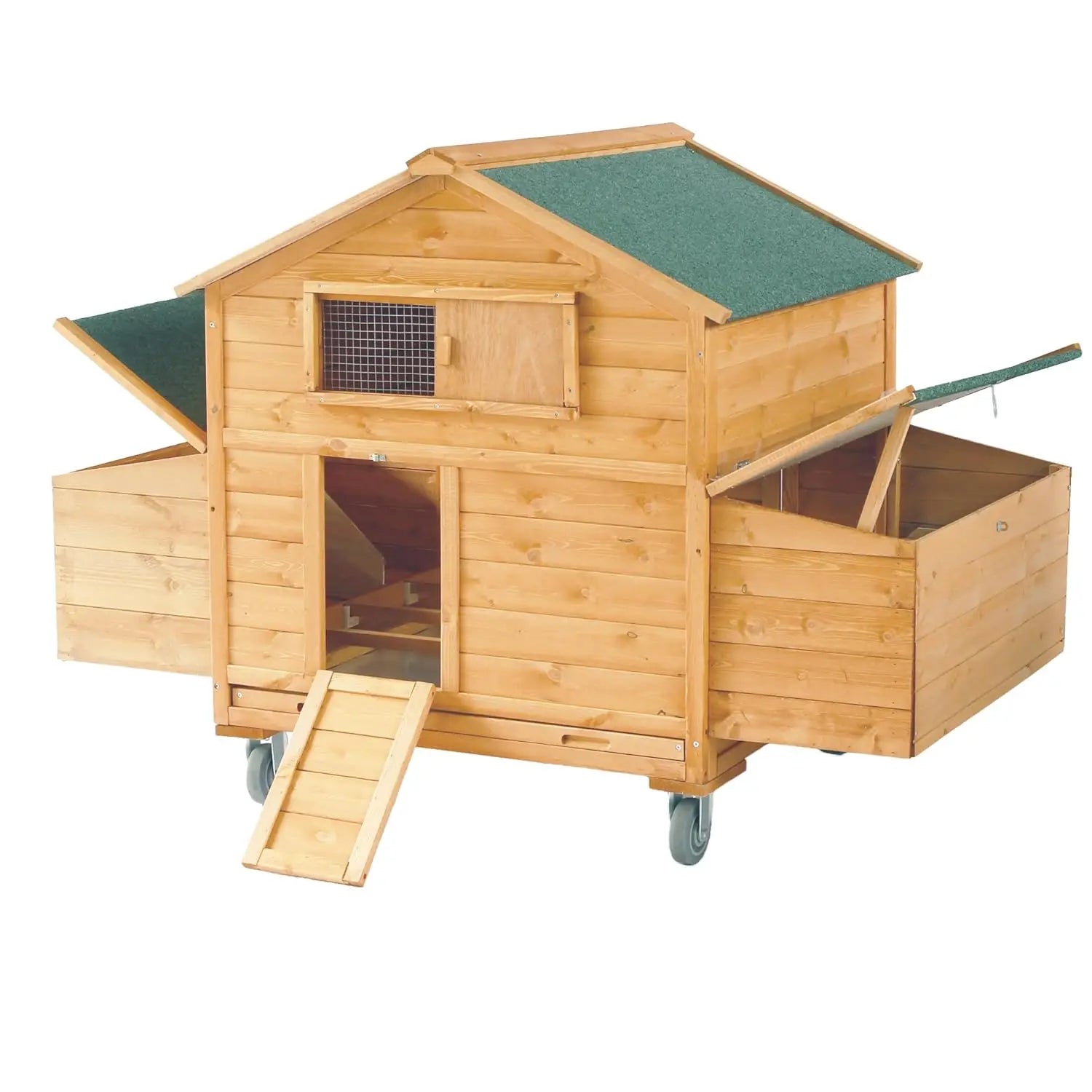
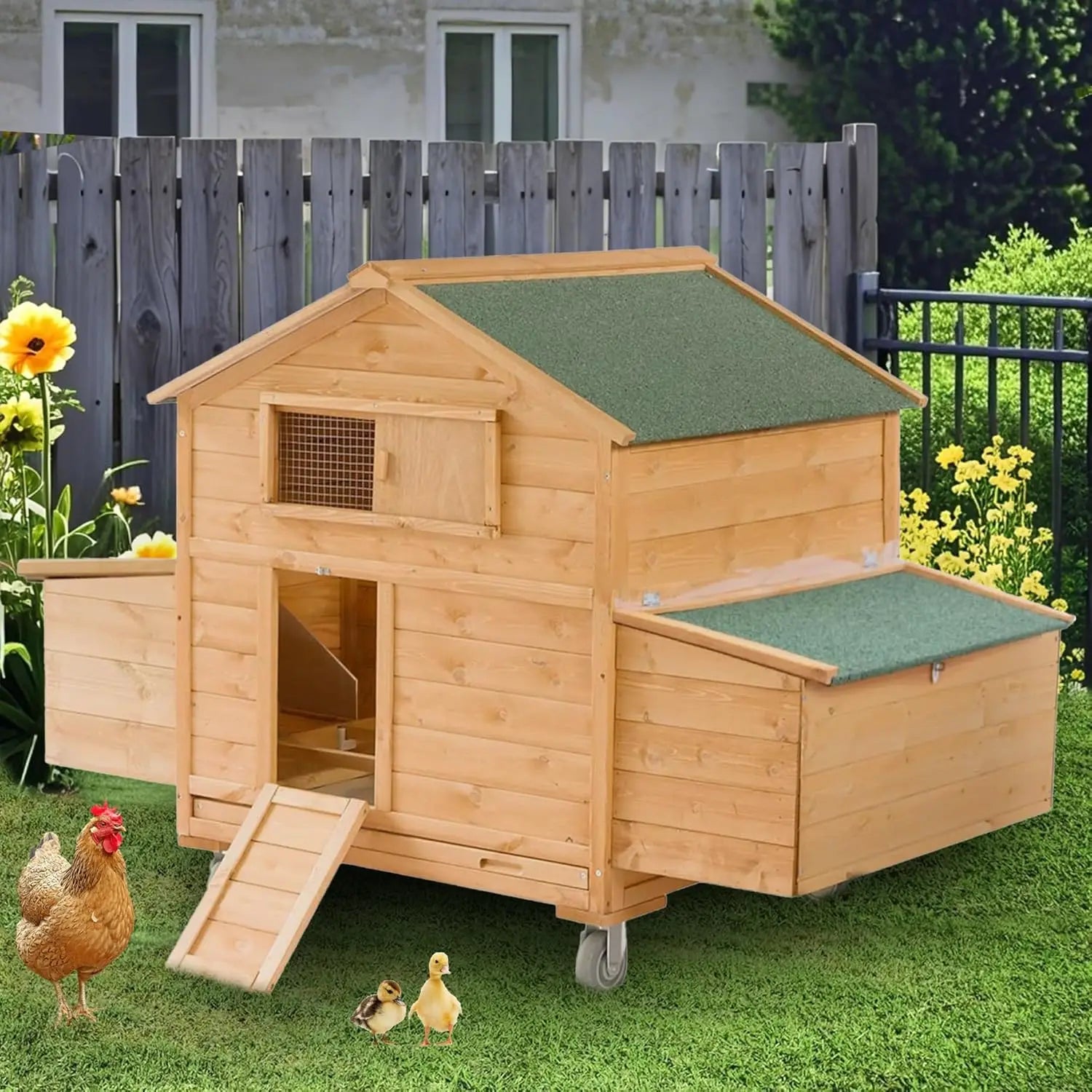
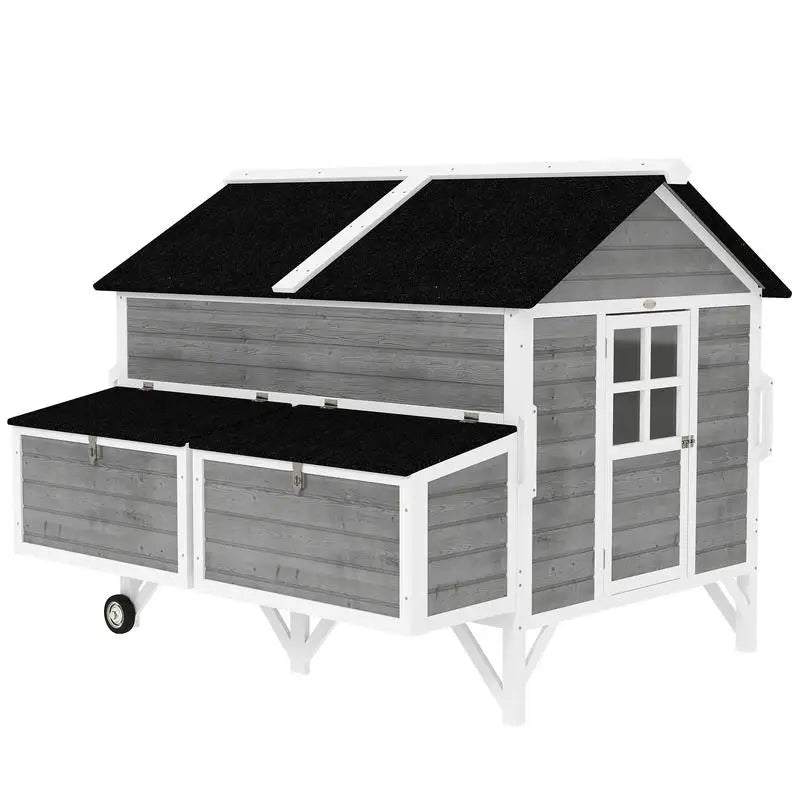
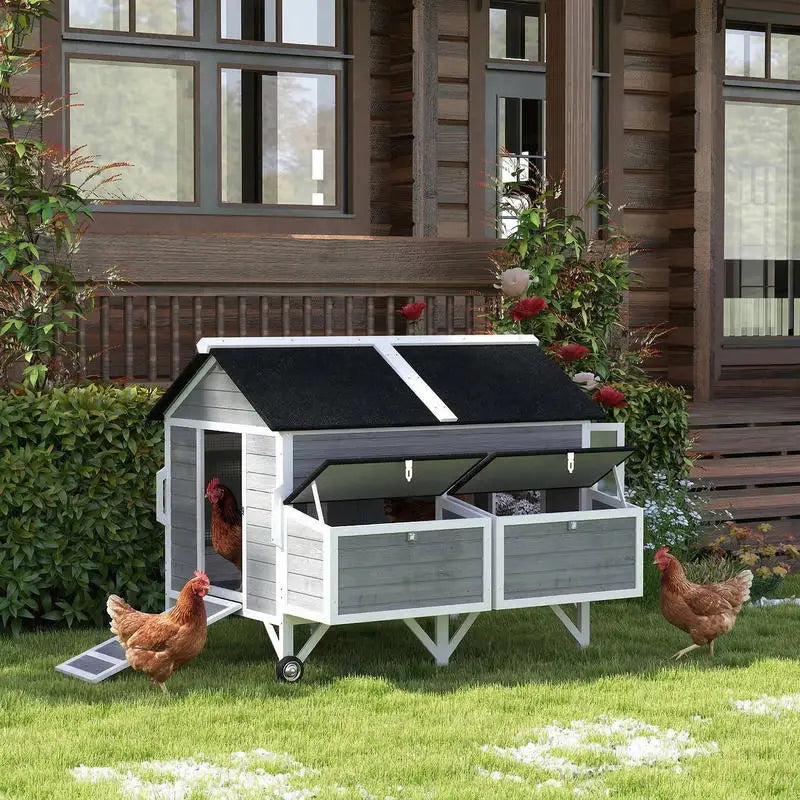
- Large wooden mobile chicken coop — 4–6 hens — wheels, nesting box and a covered run, in the size most 4–6 hen keepers end up wanting.
6–10 hens
Now the run length matters more than the coop box. Ten hens need roughly 80–100 sq ft of run between them, and a coop this long is a two-person move on anything but flat, mown ground. Ask us for the assembled weight before you settle on one — almost nobody in this category prints it, and we would rather get it from the factory than let you guess.
Browse: Large chicken coops · Chicken coops with runs
Two we'd point you at:
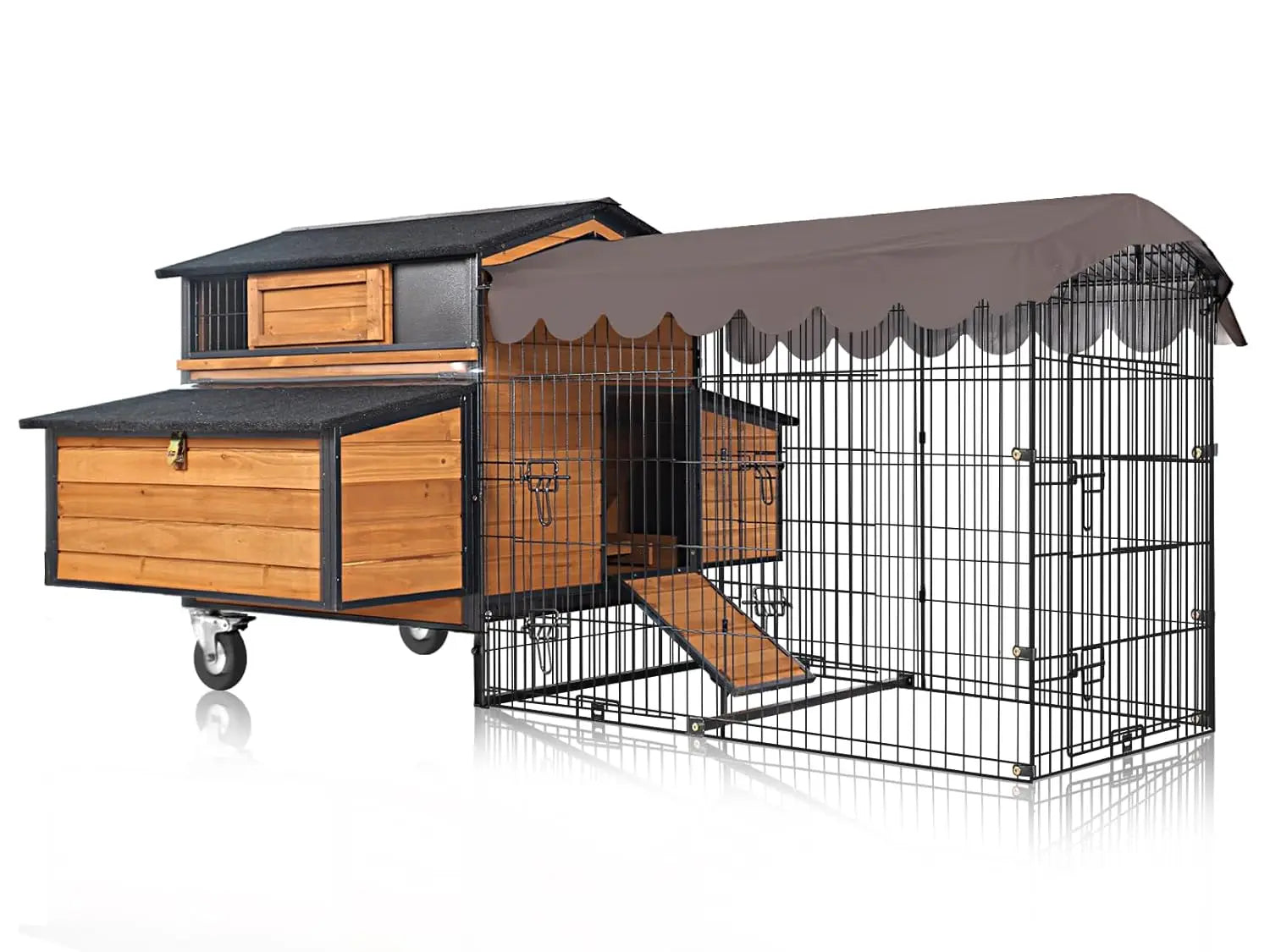
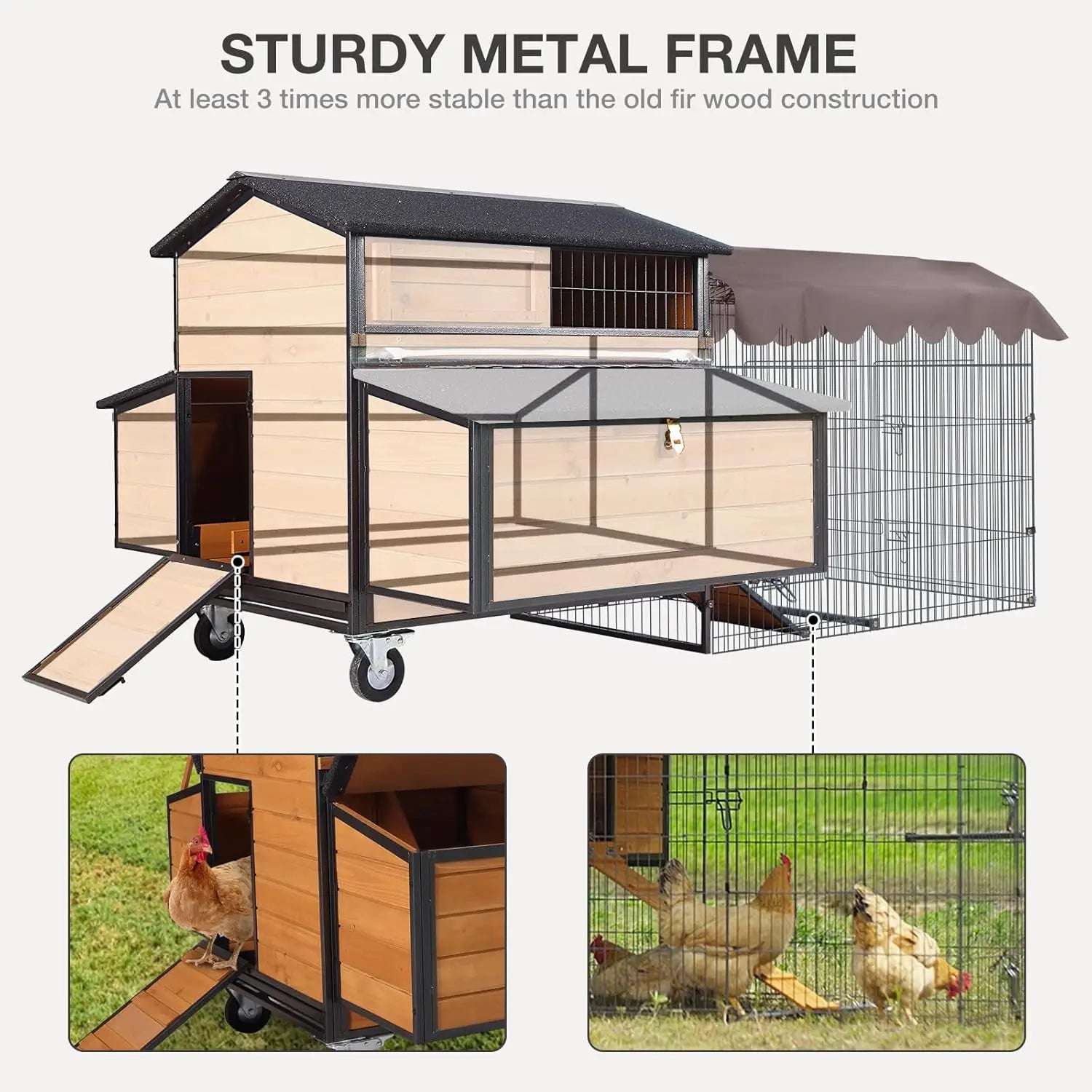
- 85" mobile chicken coop with run — 6–8 hens — steel-framed run, wheels, nesting box and a pull-out tray, in one enclosure rather than a coop and a run bought separately.
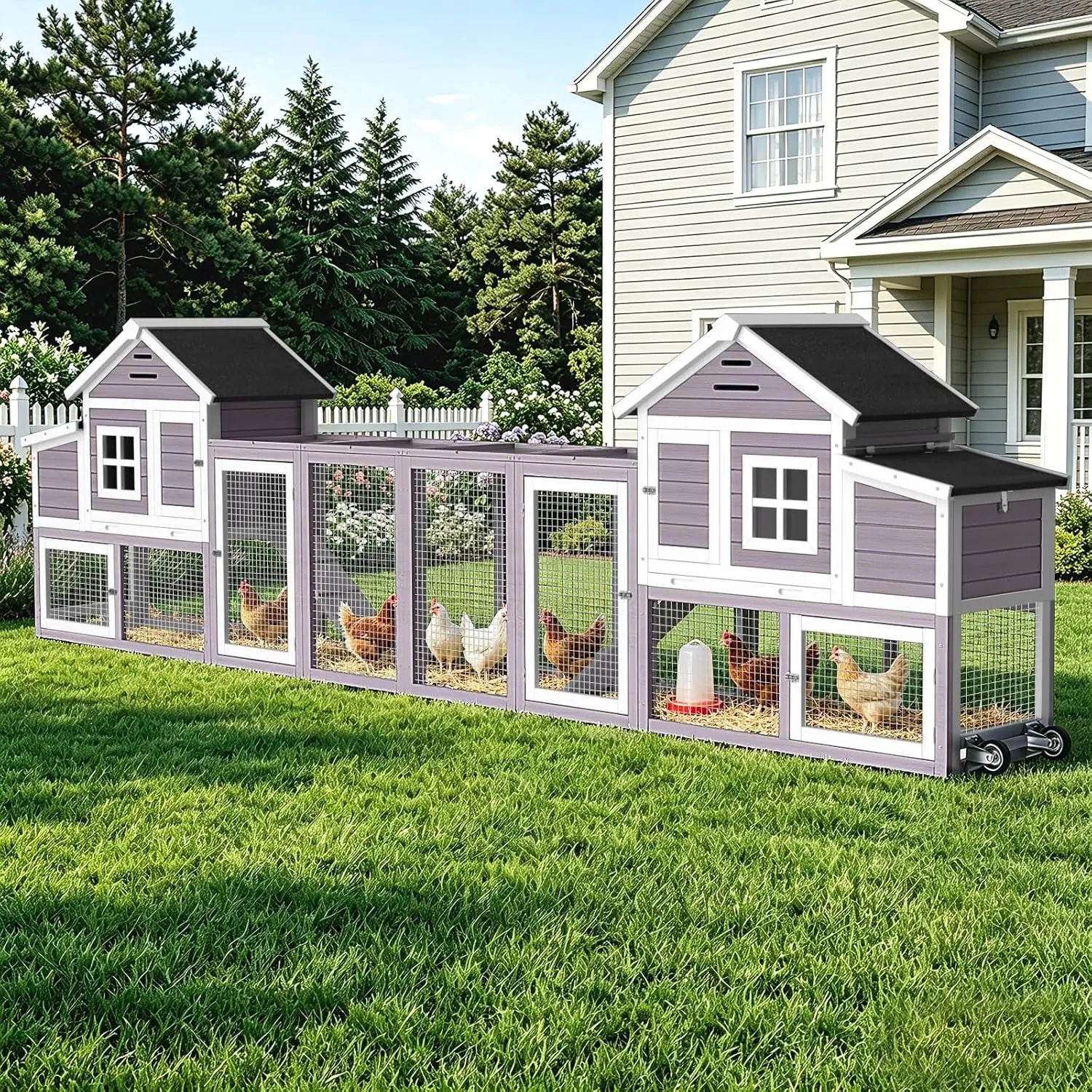
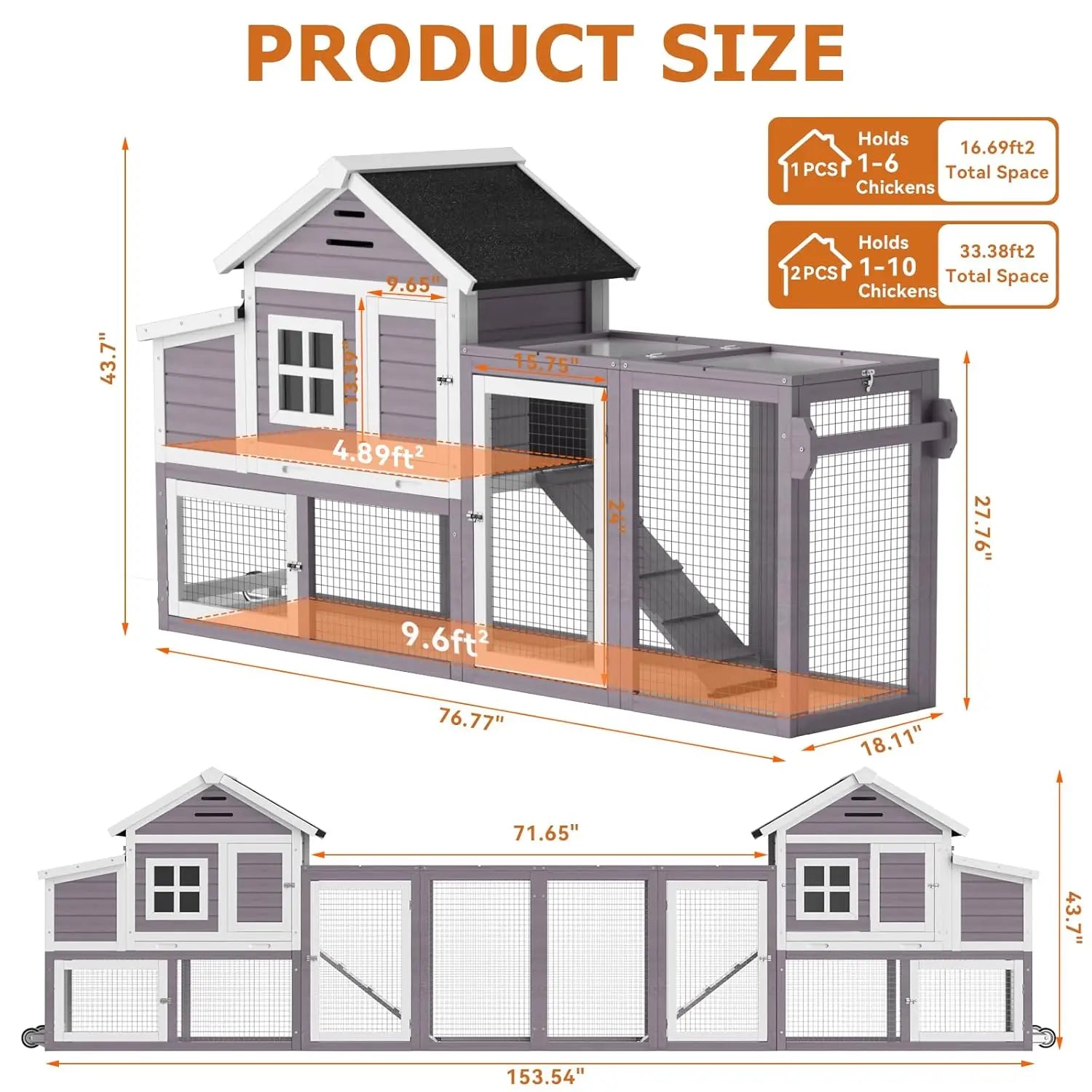
- 153" mobile chicken coop with run — the manufacturer rates it 6–10 hens. Weatherproof asphalt roof, pull-out tray, and a run long enough that the birds actually use the far end.
Walk-in, or more than 10 hens
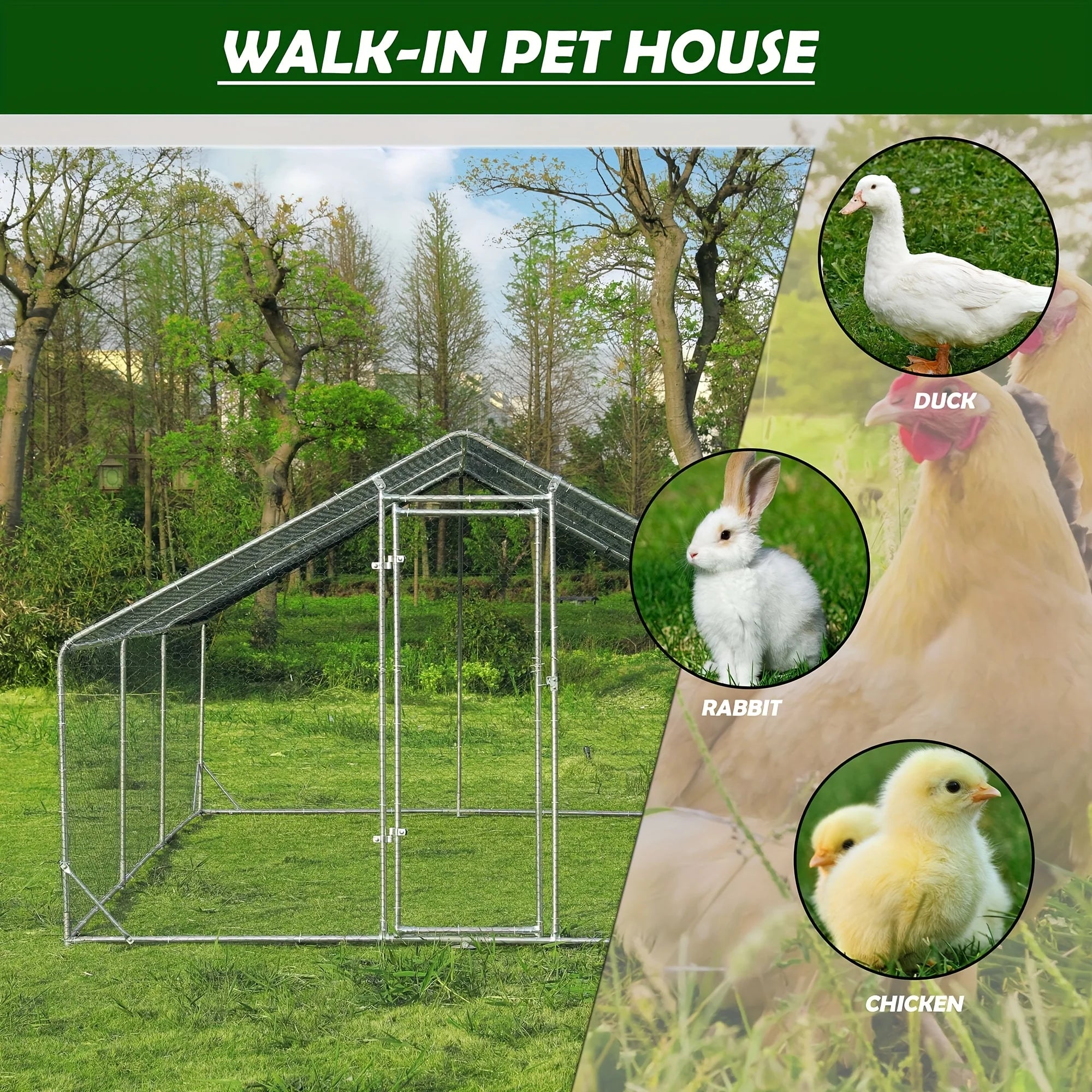
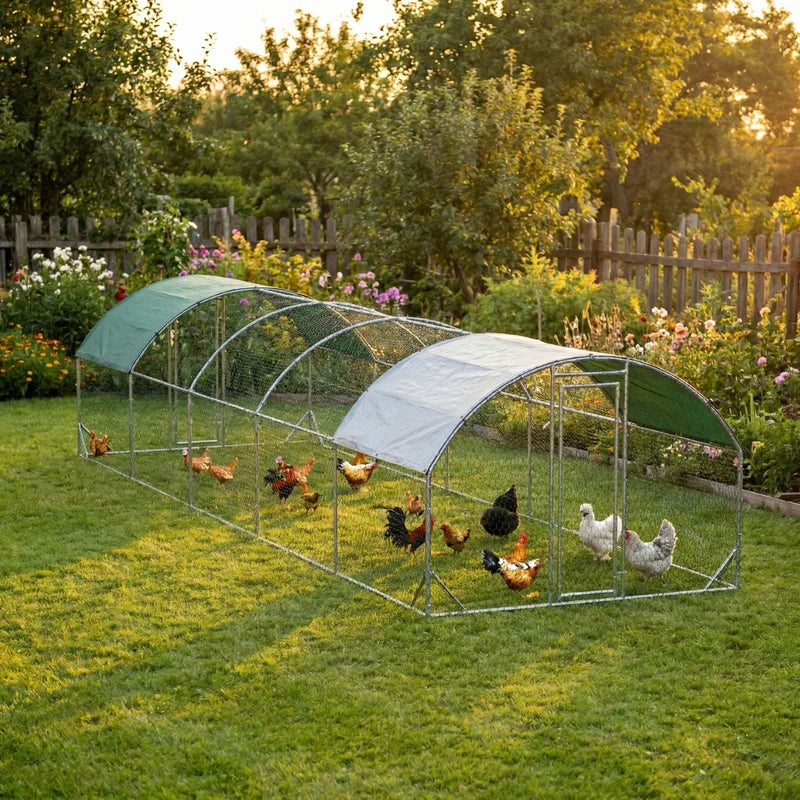
Walk-in coops trade mobility for room: a steel frame and a covered run you can stand up in, which changes what cleaning day feels like. A walk-in is the least moveable shape a coop comes in, and we'd rather say that than pretend otherwise — if you want a big flock and rotation, two smaller mobile coops usually beat one large static one.
Browse: Walk-in chicken coops
Two we'd point you at:
- PawHut walk-in metal chicken coop, 9' × 31' — zinc-coated steel frame, powder-coated mesh, a covered roof and a lockable door at walk-in height.
- Large walk-in metal chicken coop with spire roof — waterproof cover, layered wire mesh, and the same stand-up height for less money.
Question 2 — how often will you move it?
| You plan to move it | What you need | Where to look |
|---|---|---|
| Every day or two | A true chicken tractor: open or part-open floor, so the birds are on grass and the whole thing walks to a fresh patch | Chicken tractors |
| Weekly, or when the grass thins | A coop on wheels: solid floor, bedding and a tray, wheels for repositioning rather than daily rotation | Mobile chicken coops |
| A few times a season | A large coop with a run and wheels — moved for winter shelter or a new patch, not on a schedule | Coops with runs |
| Never | Height and cleaning access matter more than wheels | Walk-in coops |
The distinction that decides this: a chicken tractor has an open or part-open floor — the hens stand on grass. A coop on wheels has a solid floor — it rolls, but the birds never touch the pasture. Both are useful. They're not the same purchase, and we only call something a tractor when the floor says so. Manufacturers in this category rarely put the floor in writing at all; where one does, it is on that product page, and where none does we will ask them before you order.
Still not sure?
Read the chicken coop size guide for the full arithmetic, or email sales@moveablechickencoop.com with your hen count and your yard. Telling you a coop is too small is cheaper for everyone than a return.
Found your match? Shop it by style