


Collection: Mobile chicken coops
Coops on wheels that follow the grass — from compact one-person movers to full coop-and-run rigs, so the flock gets fresh ground instead of one bare patch.
Featured product

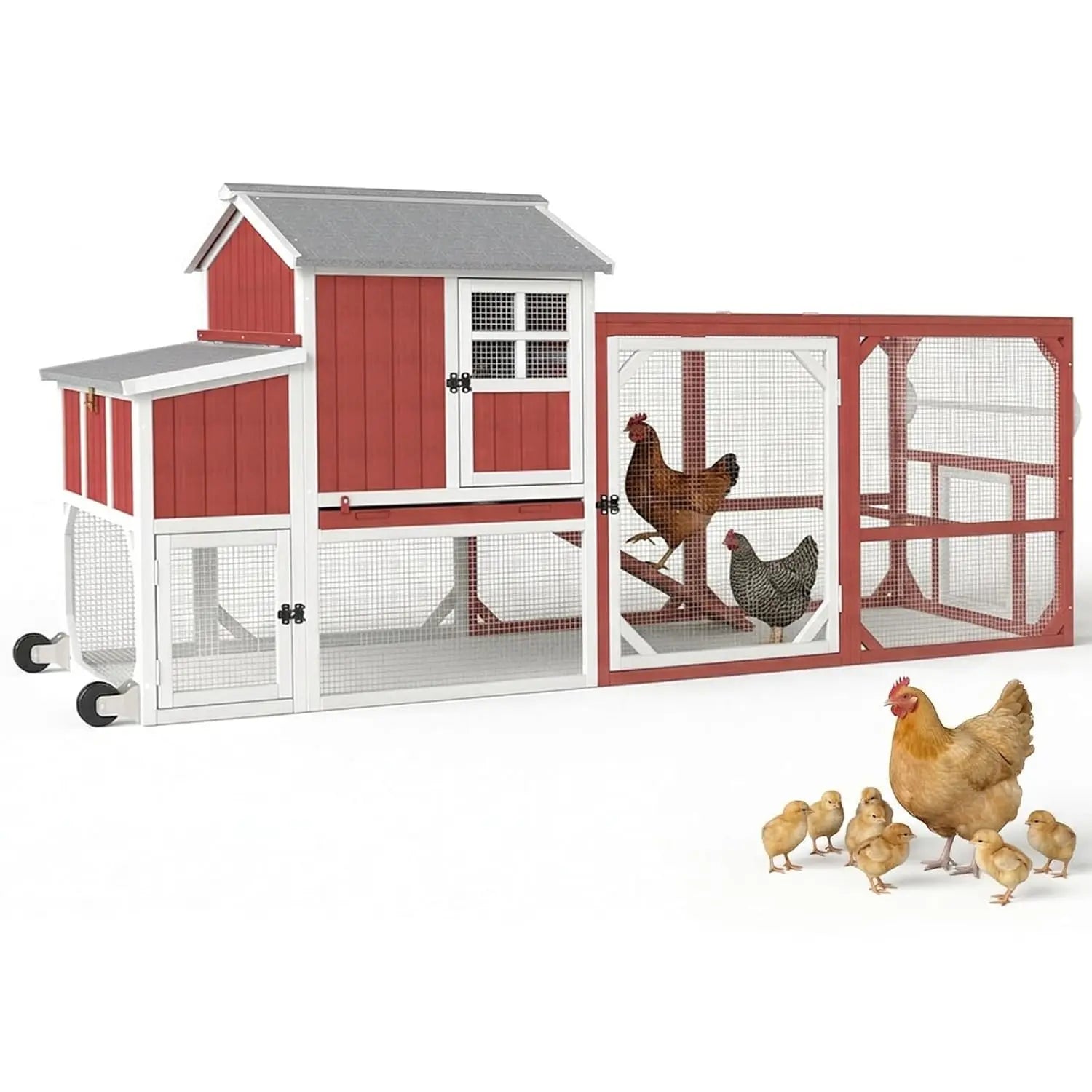

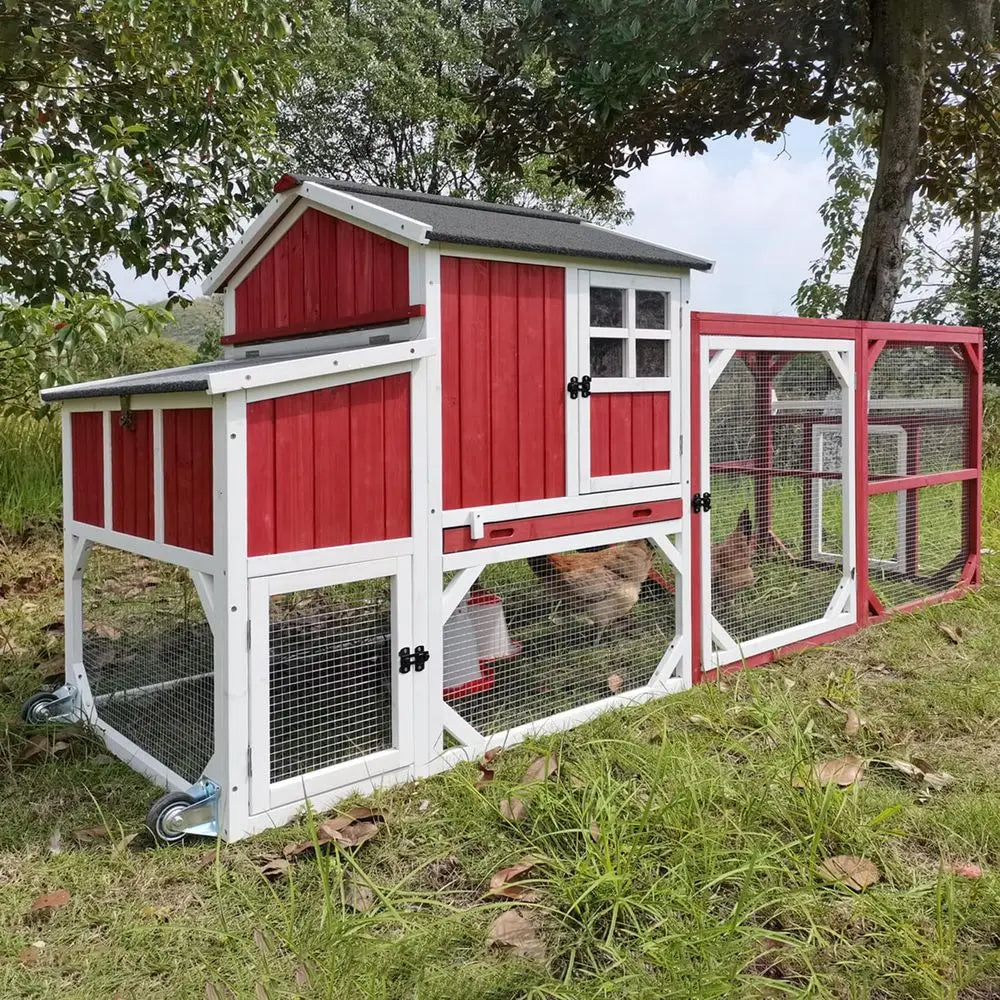
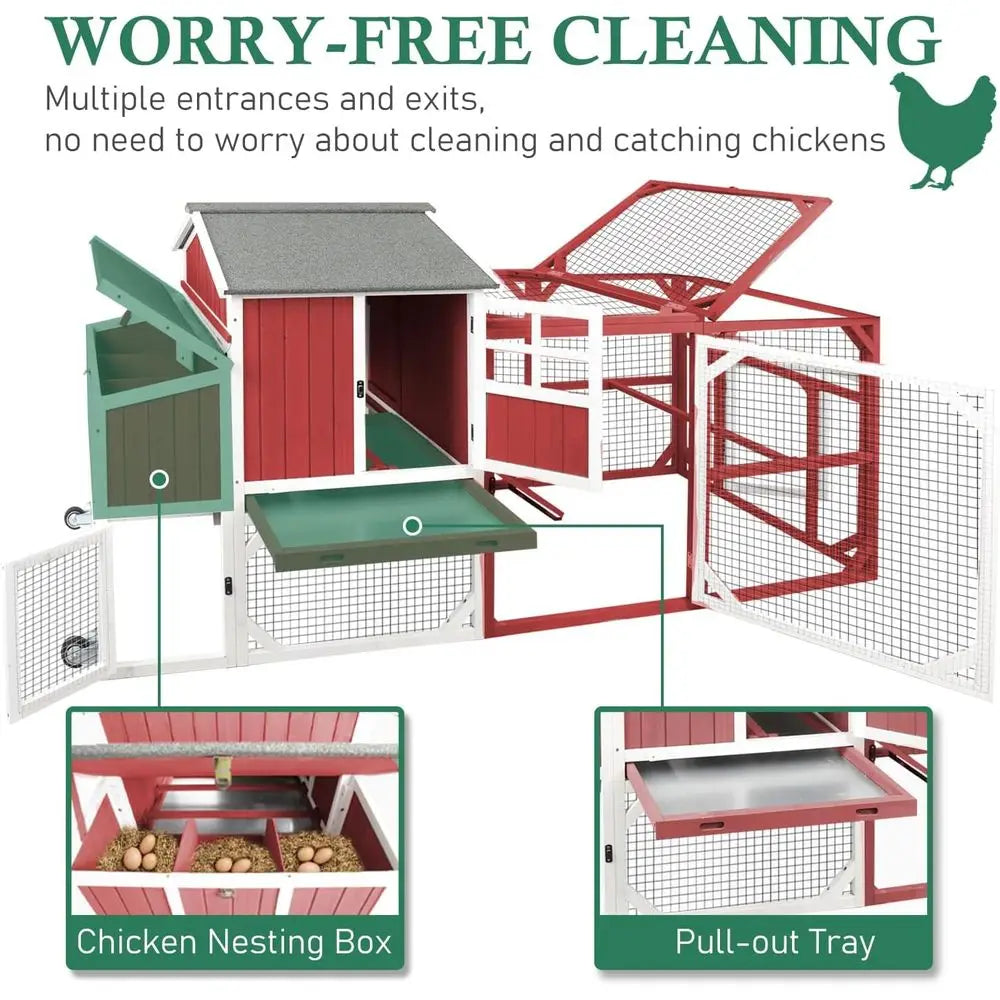
Not sure which one?
Three questions: flock size, yard space, how often you plan to move it.
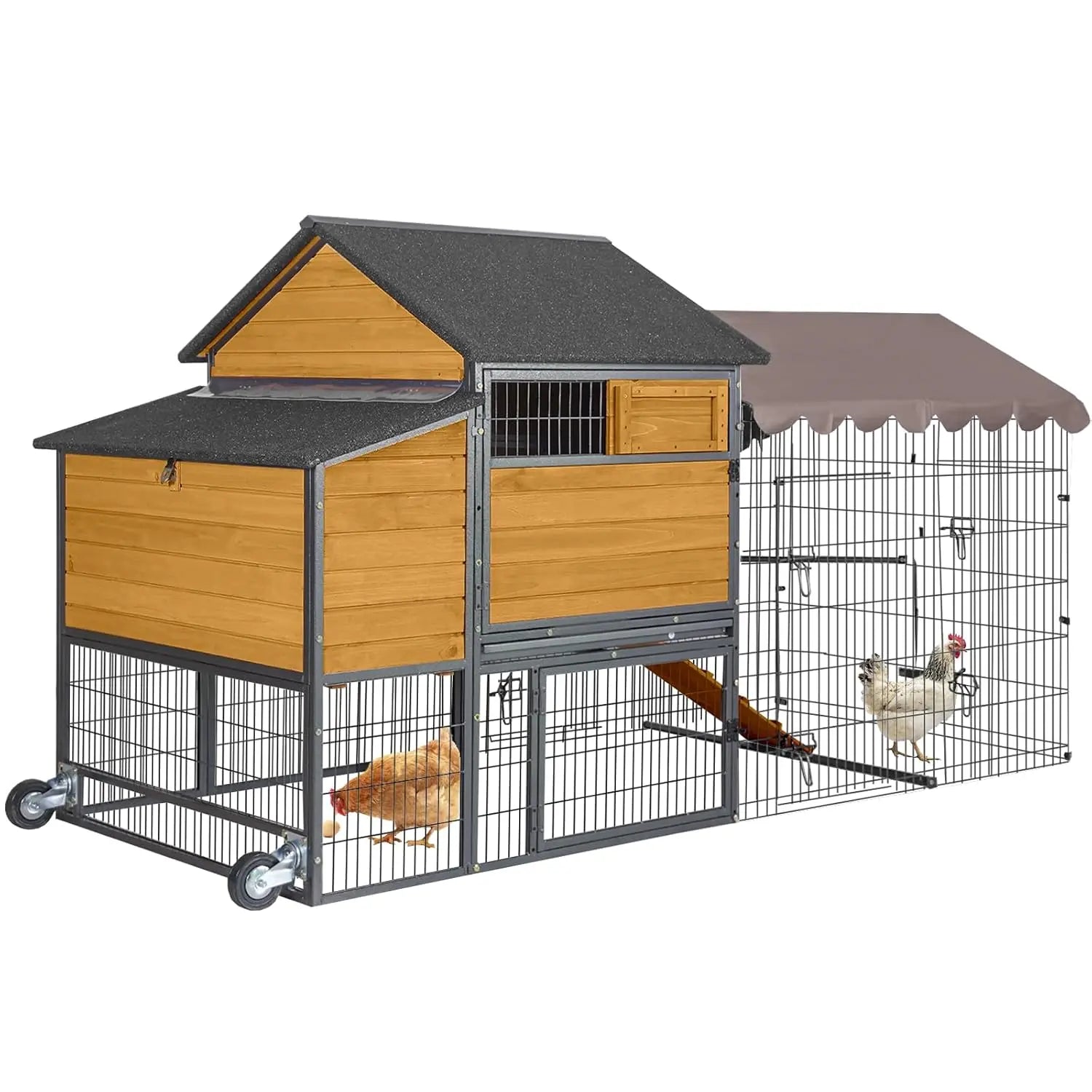
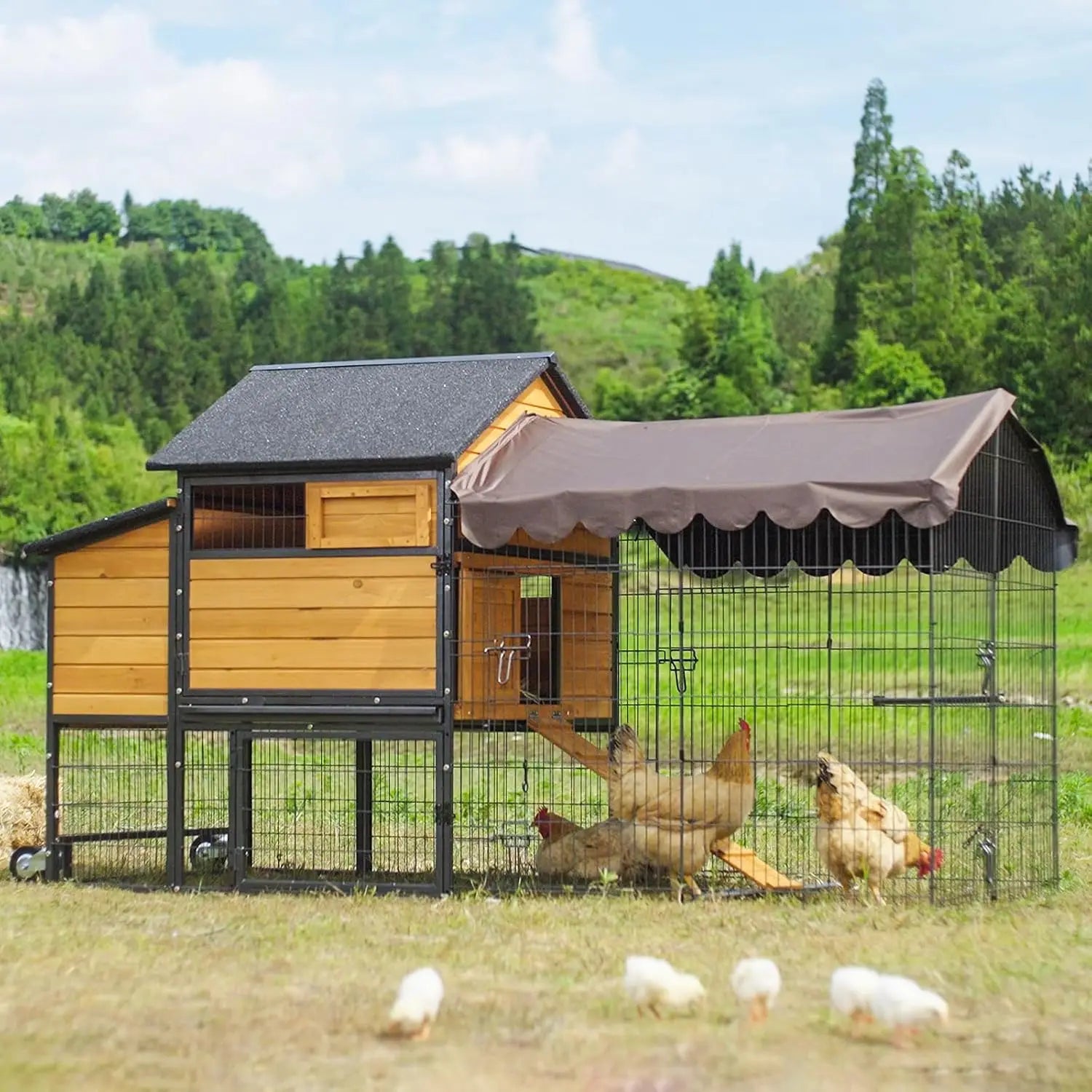
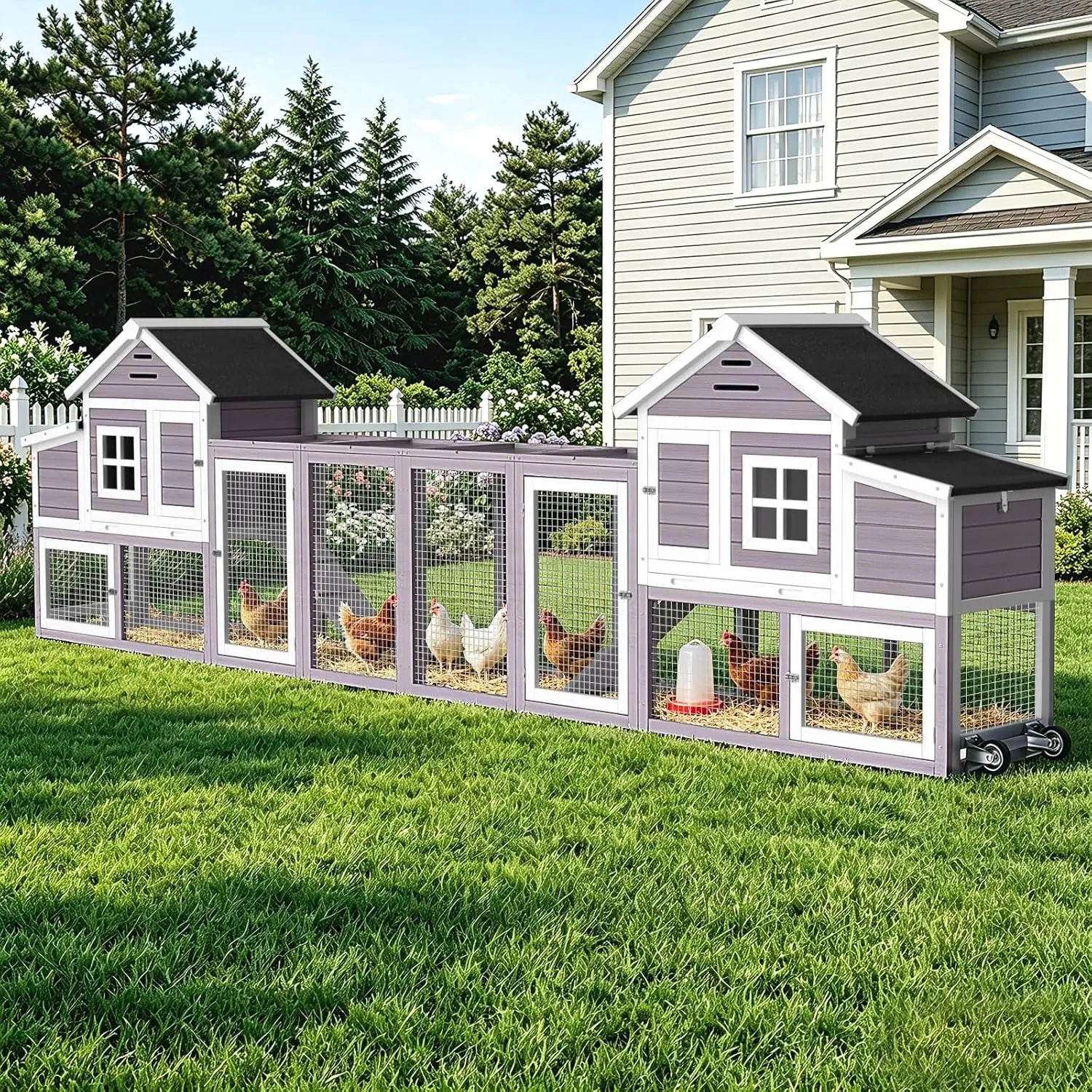
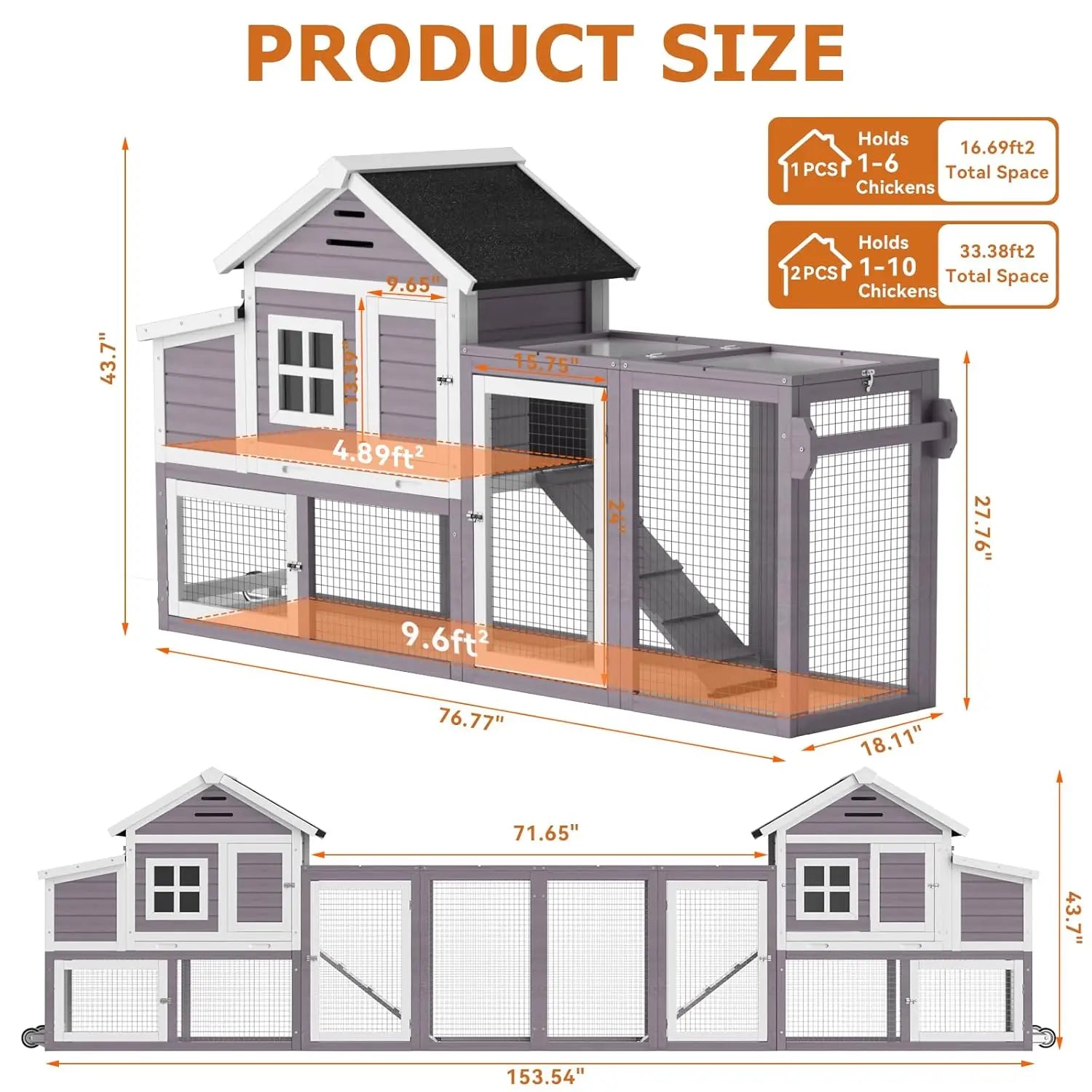
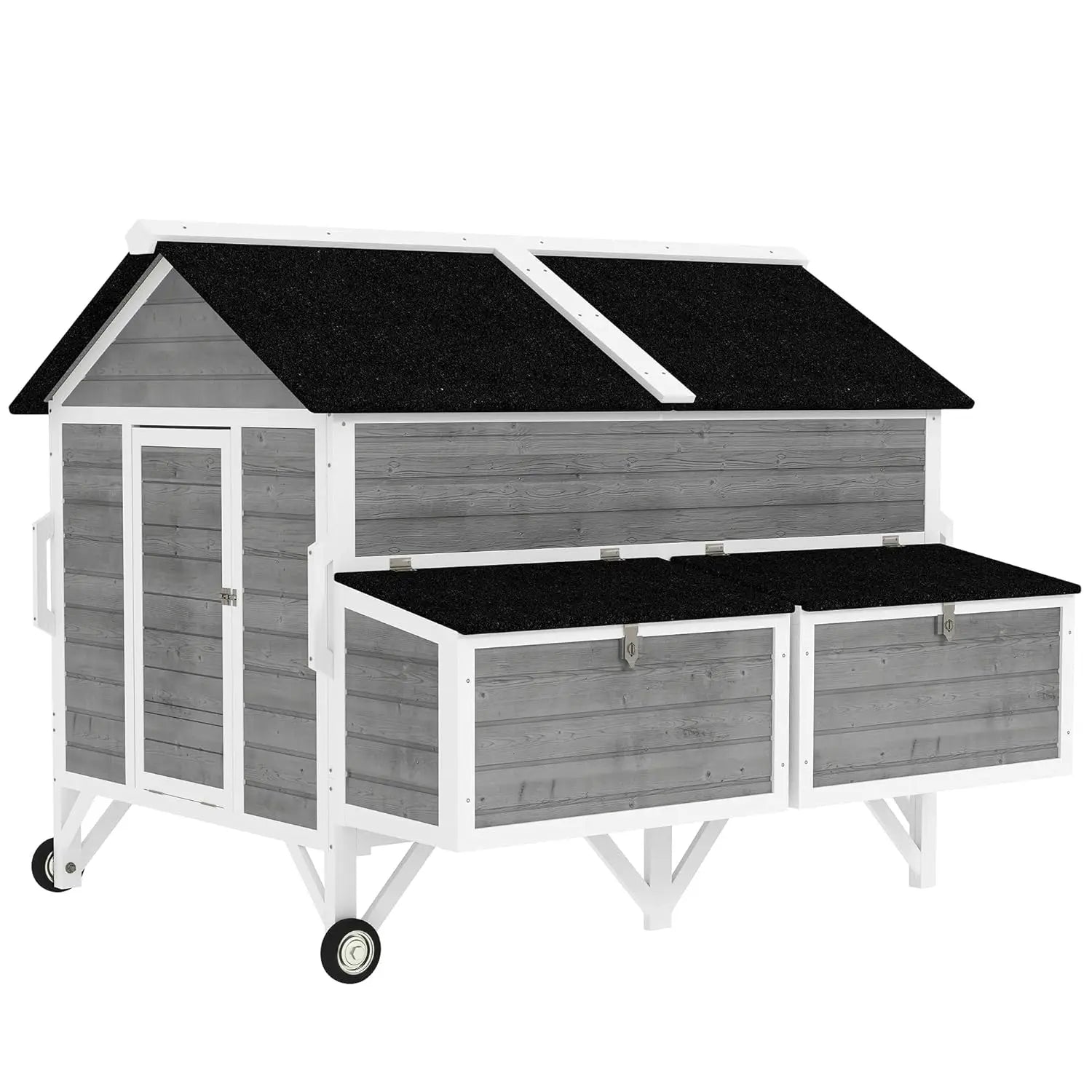
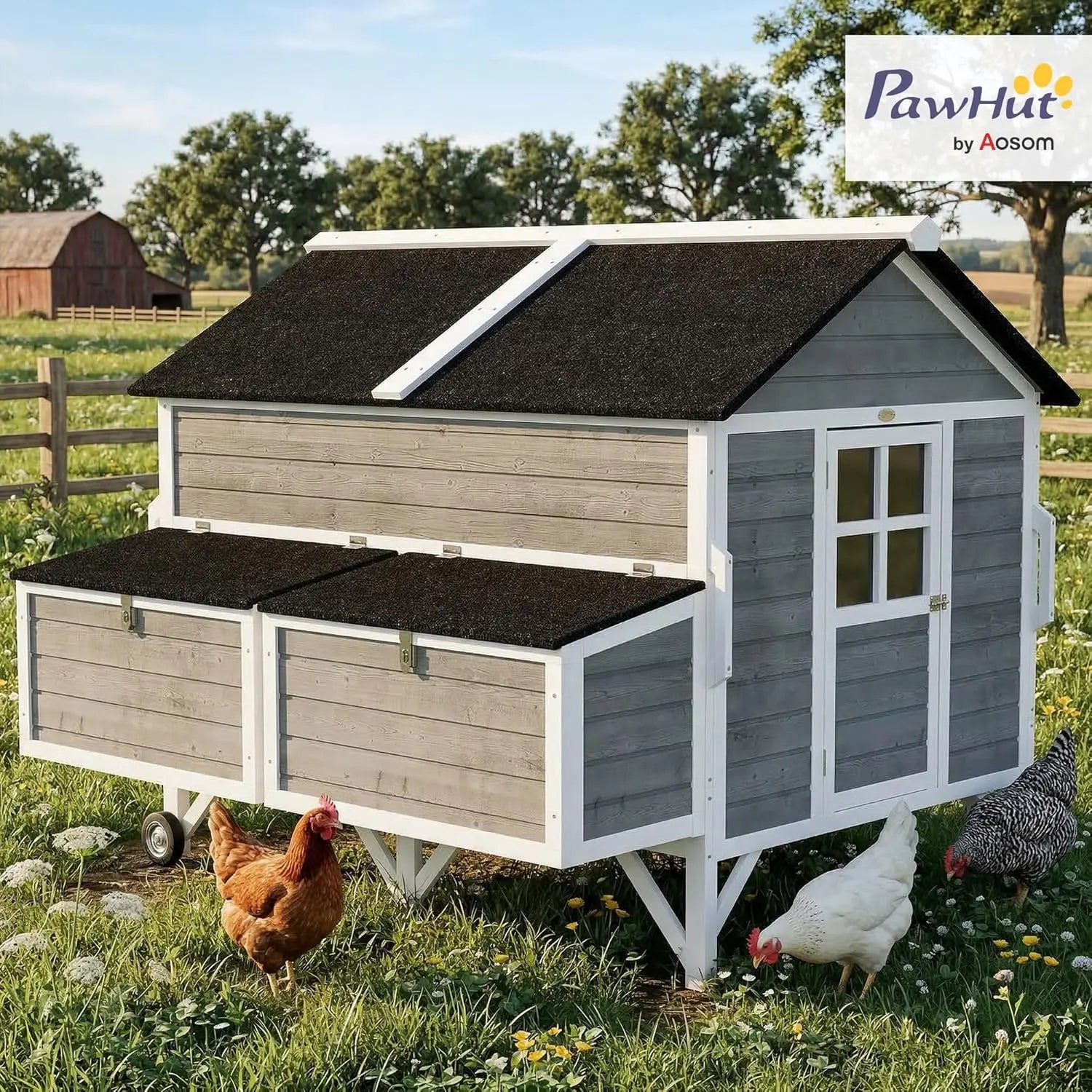
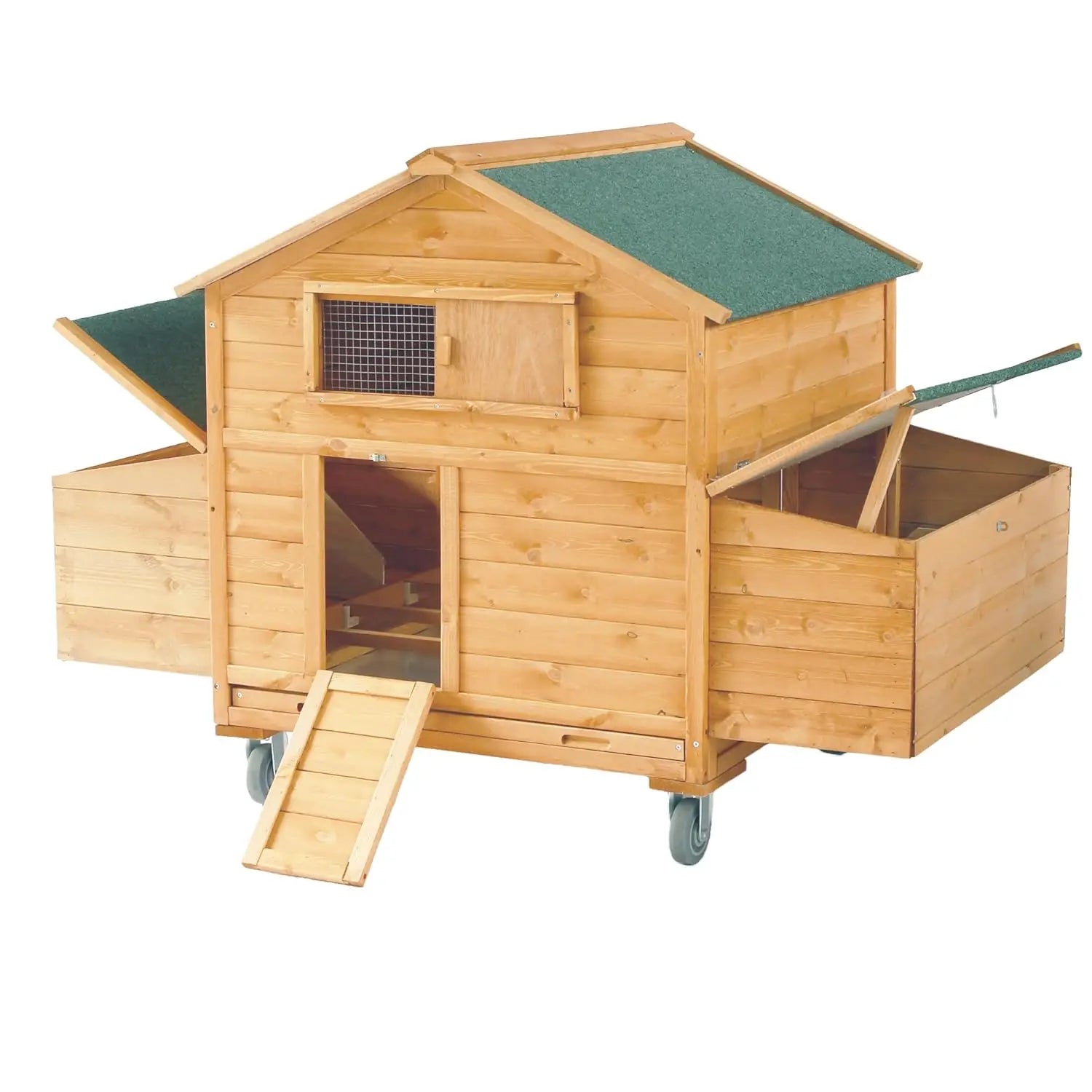
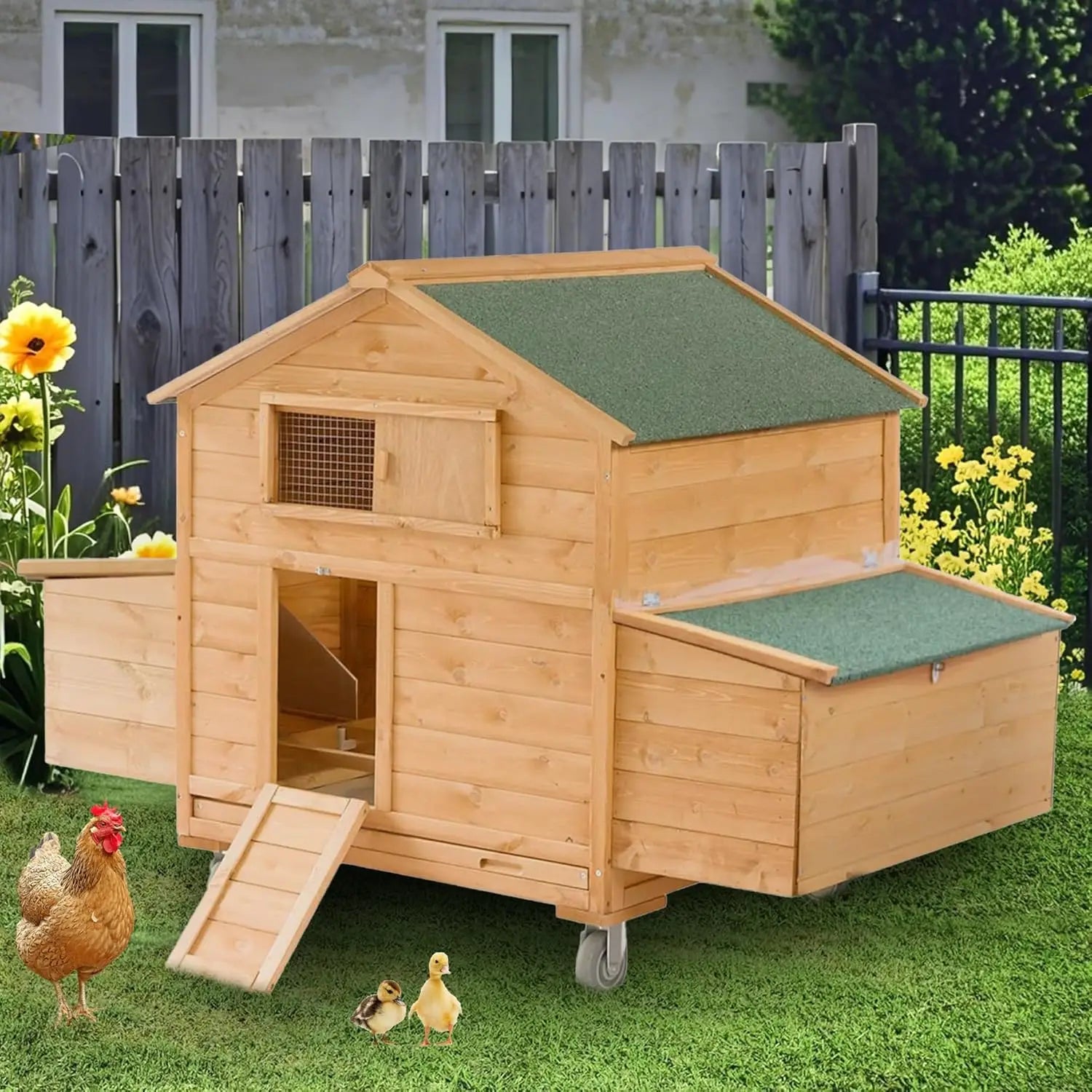

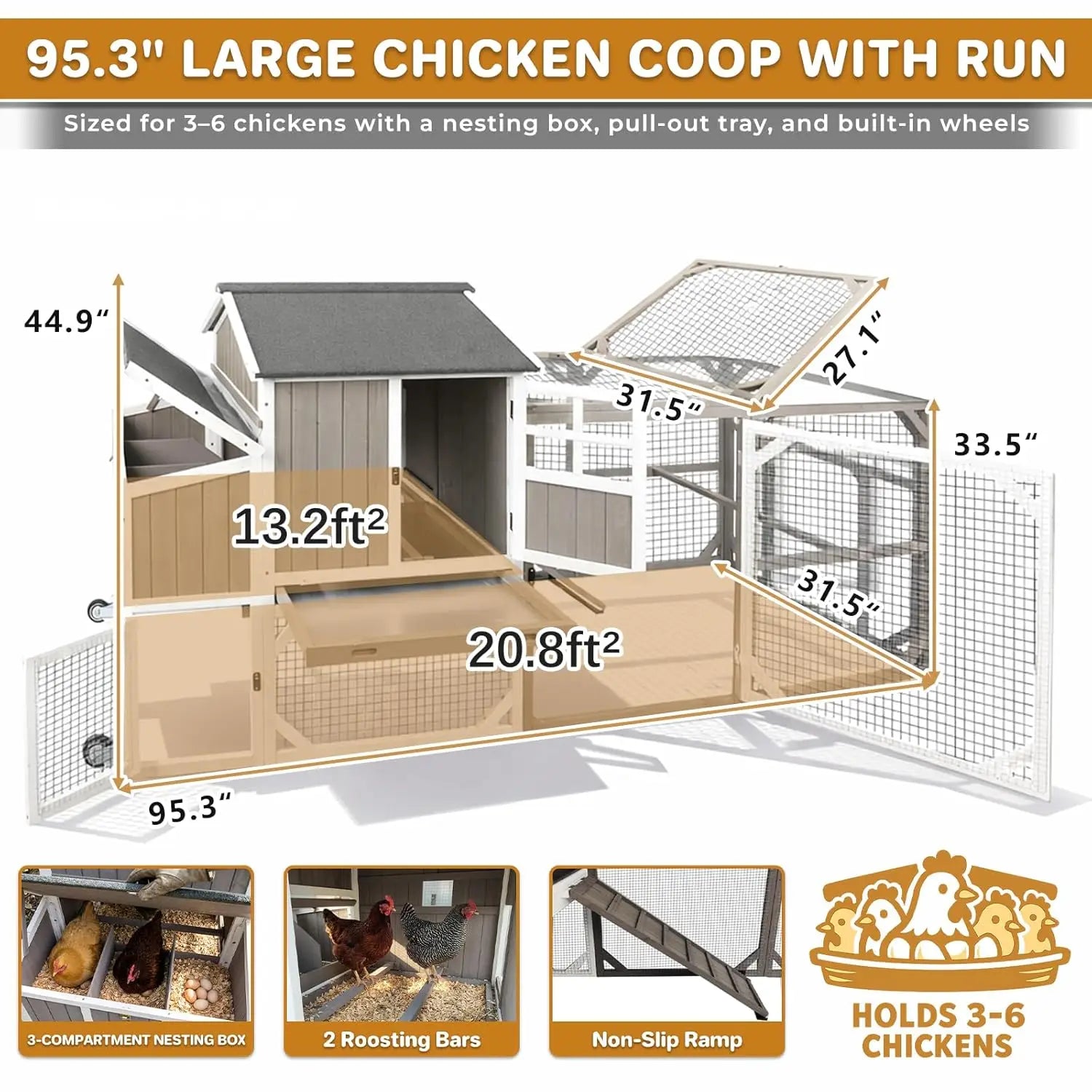
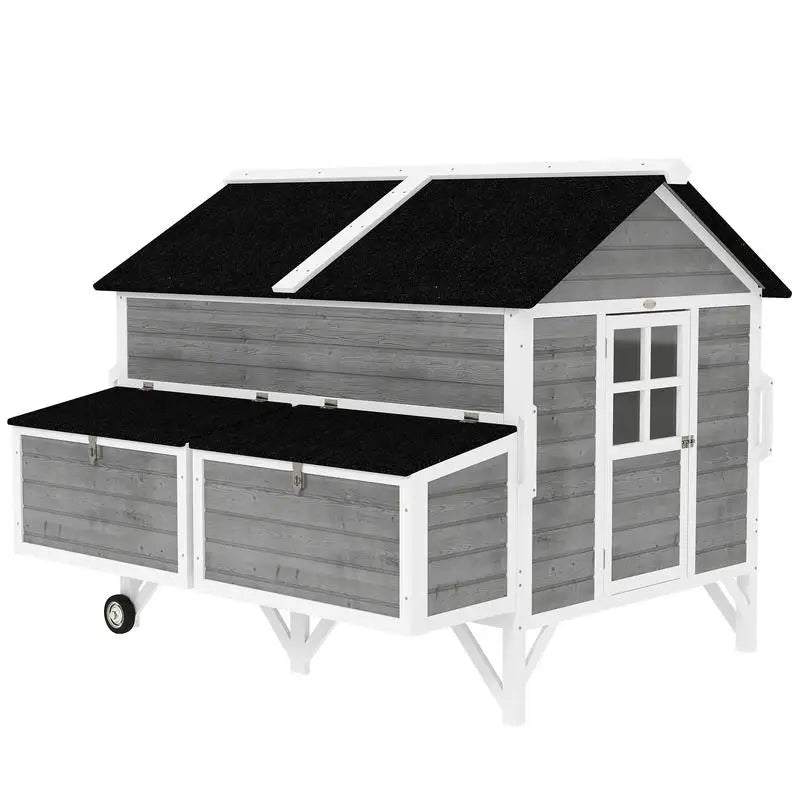
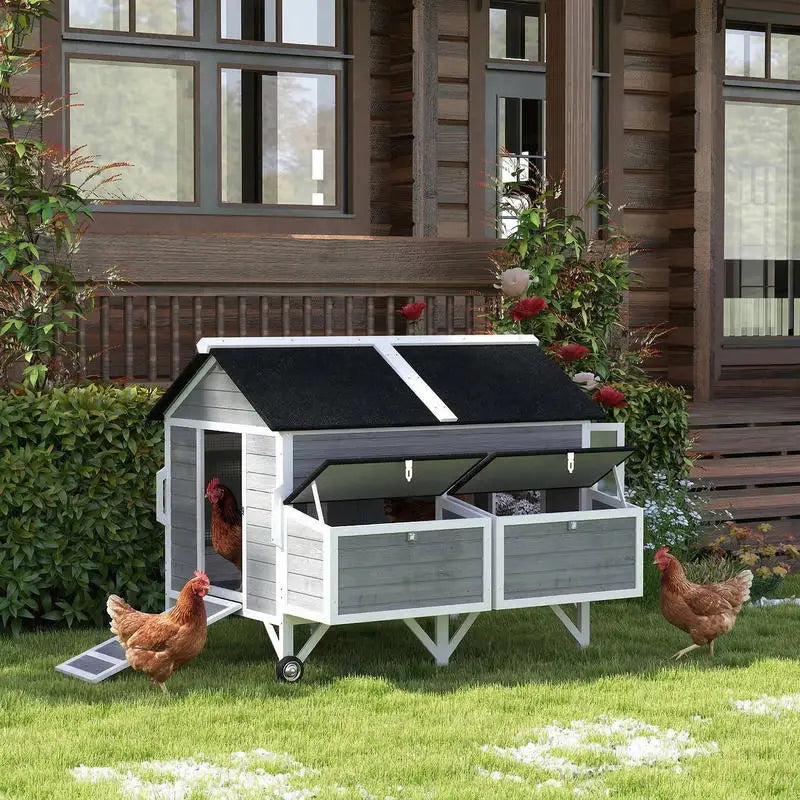
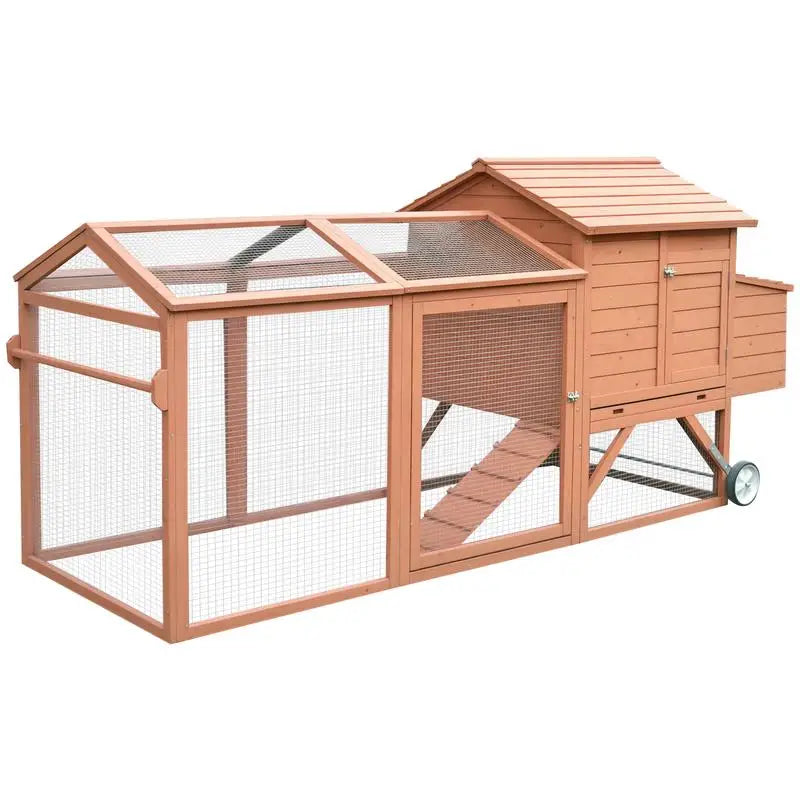
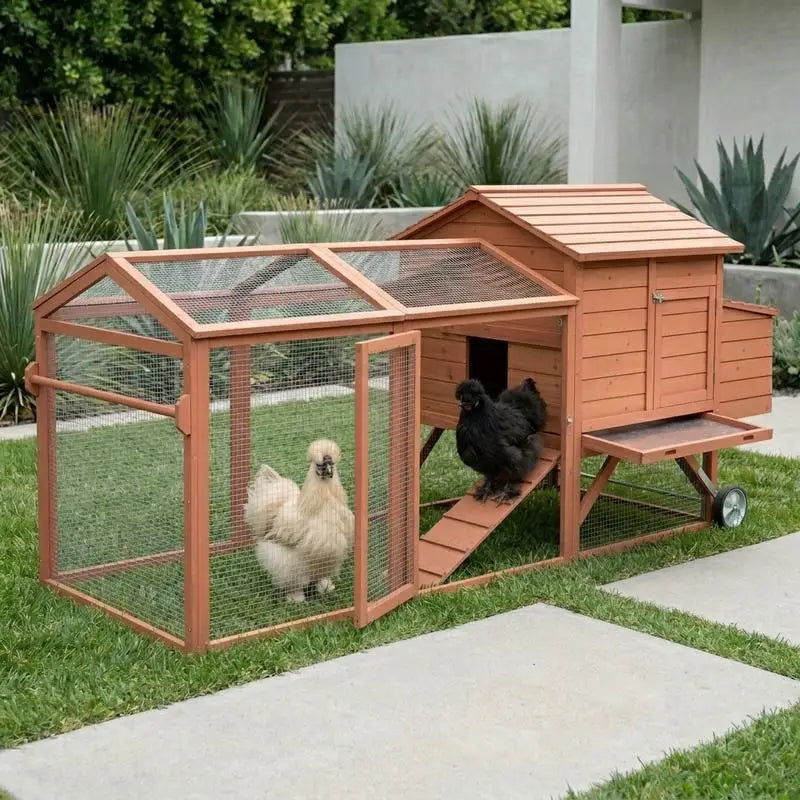
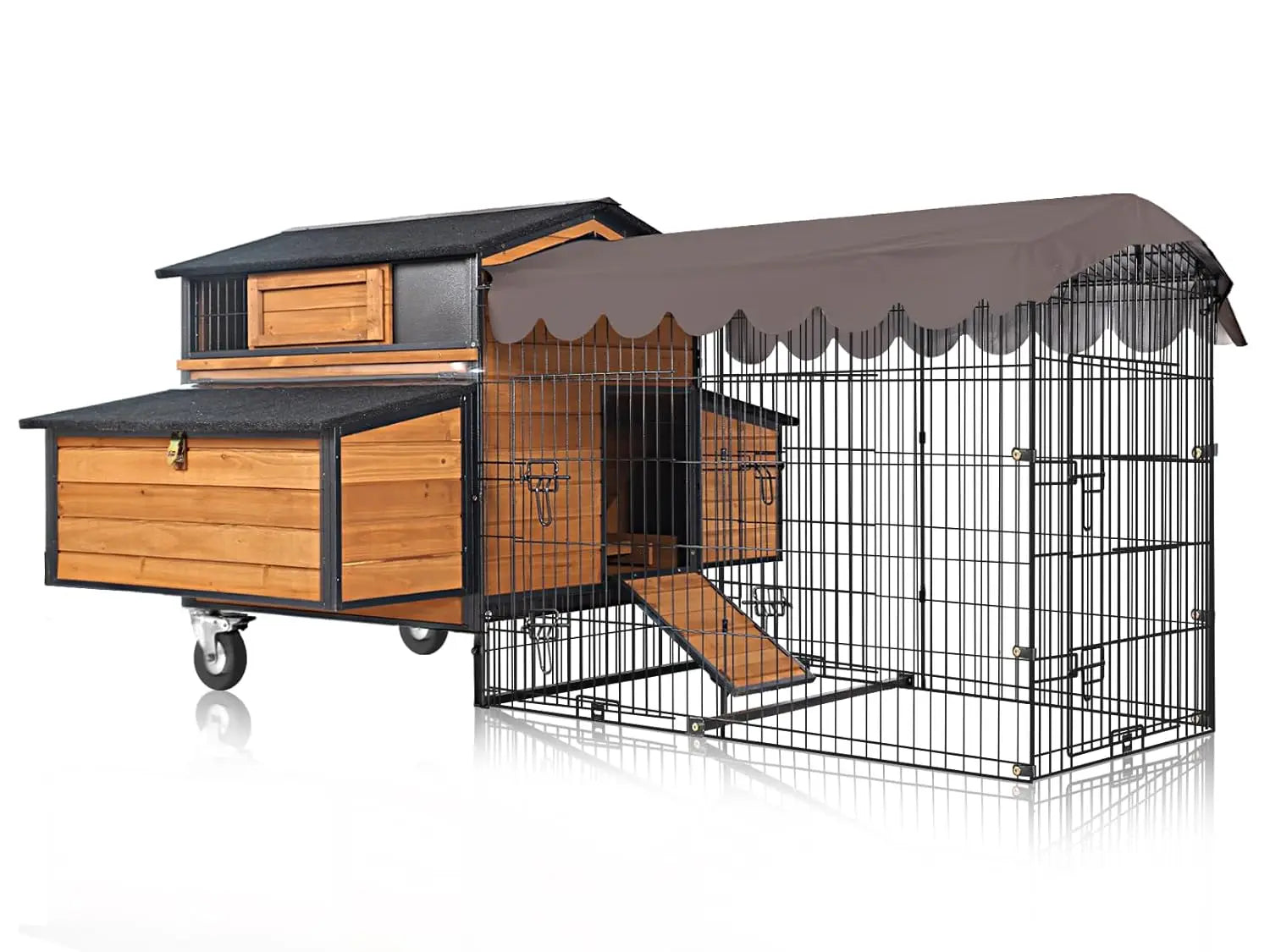
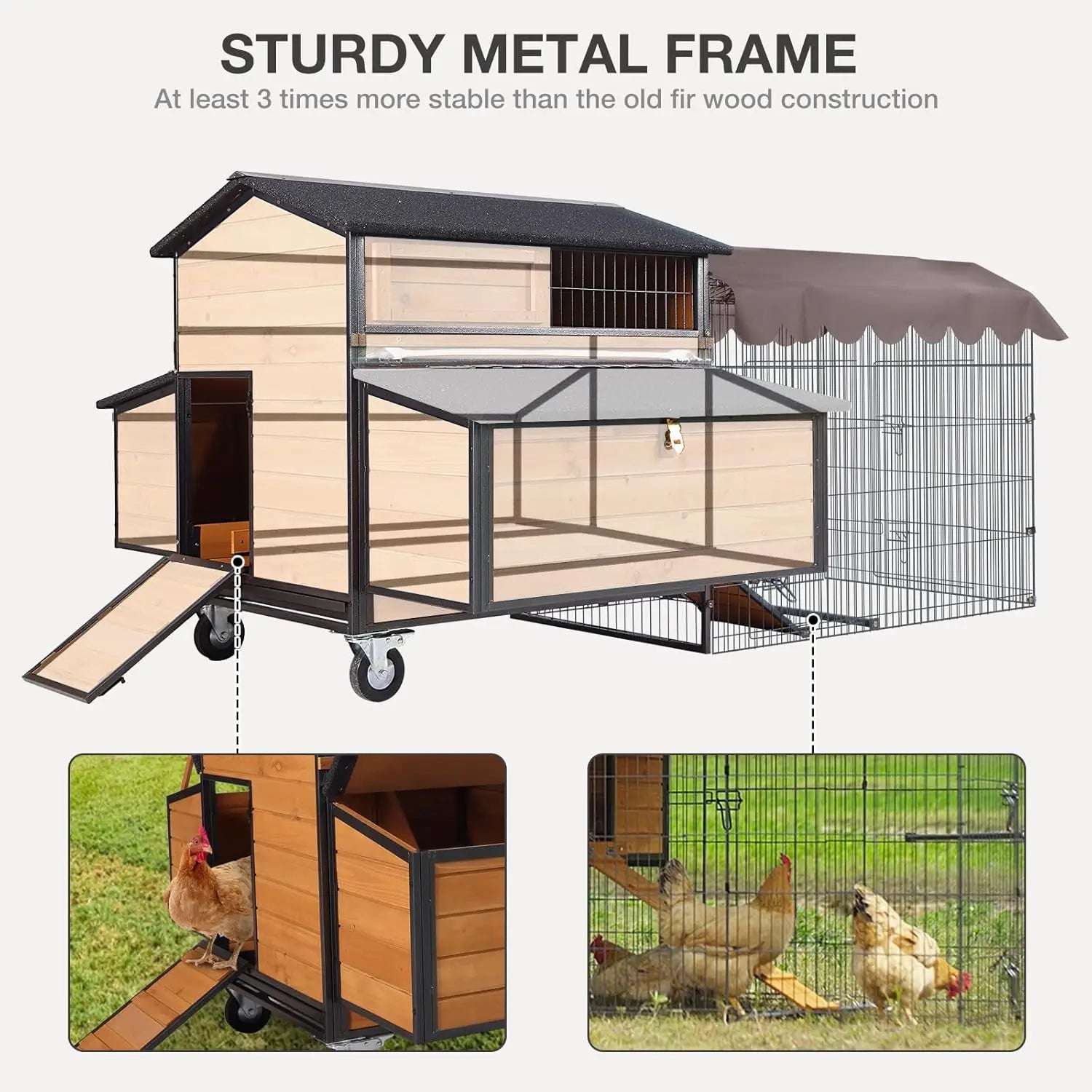
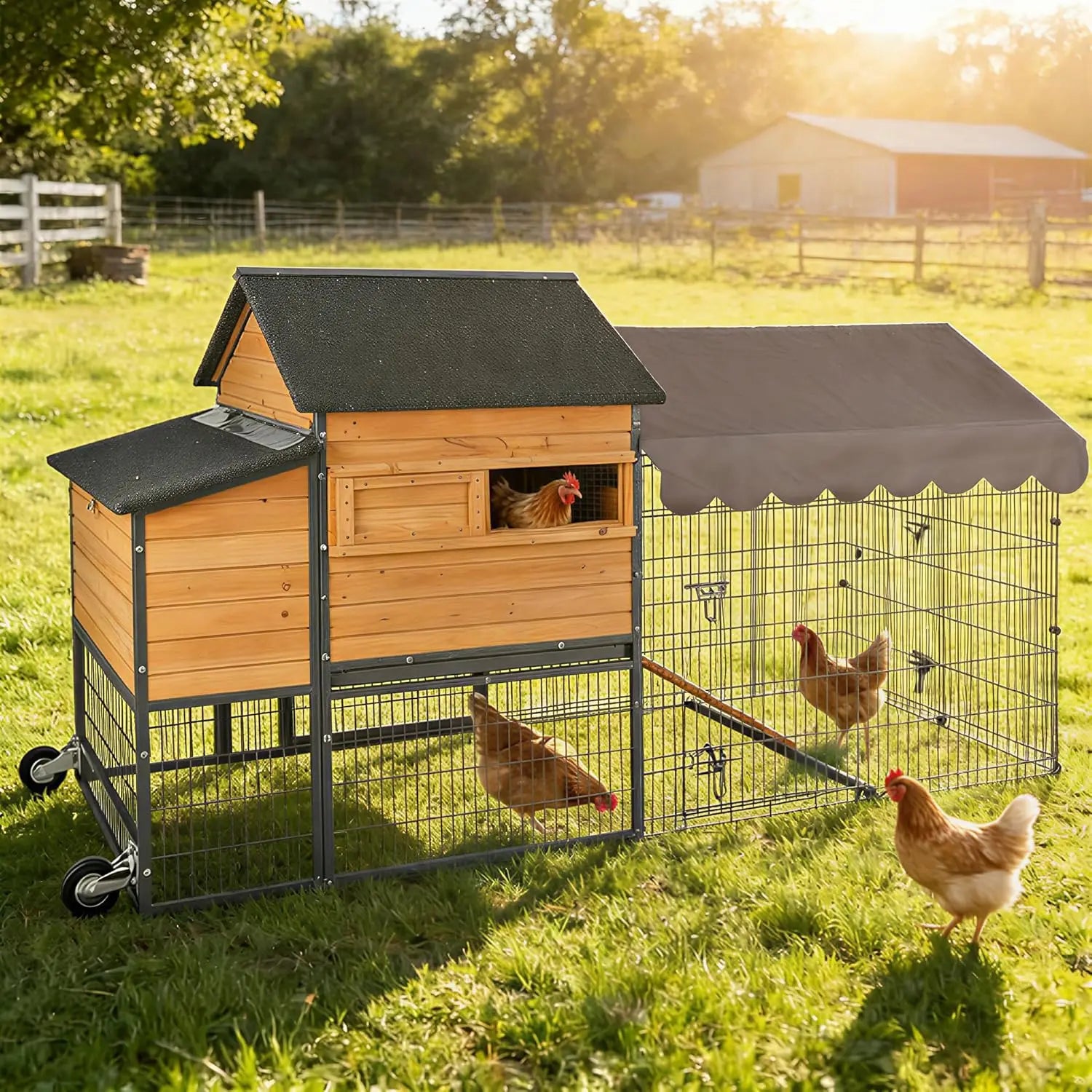

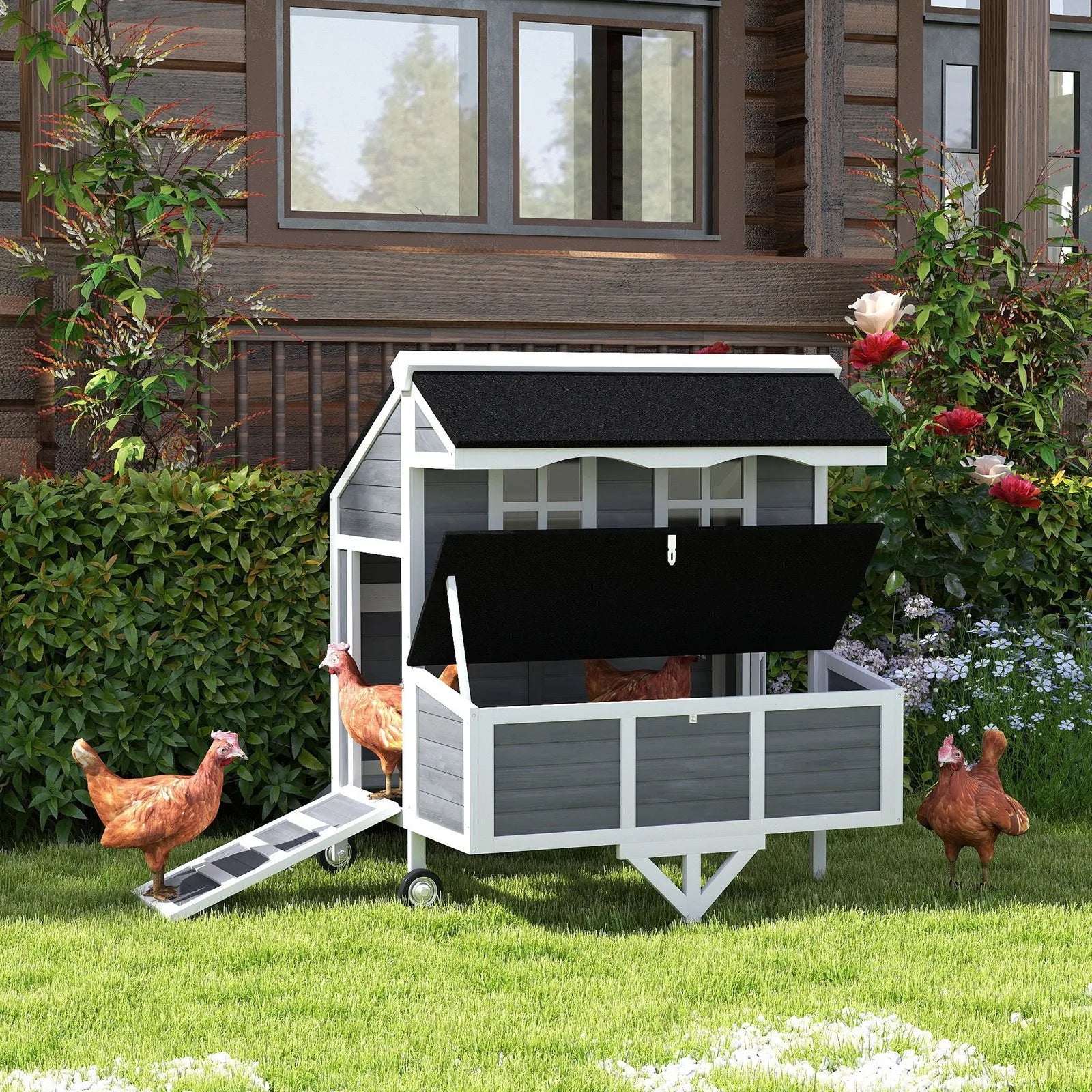
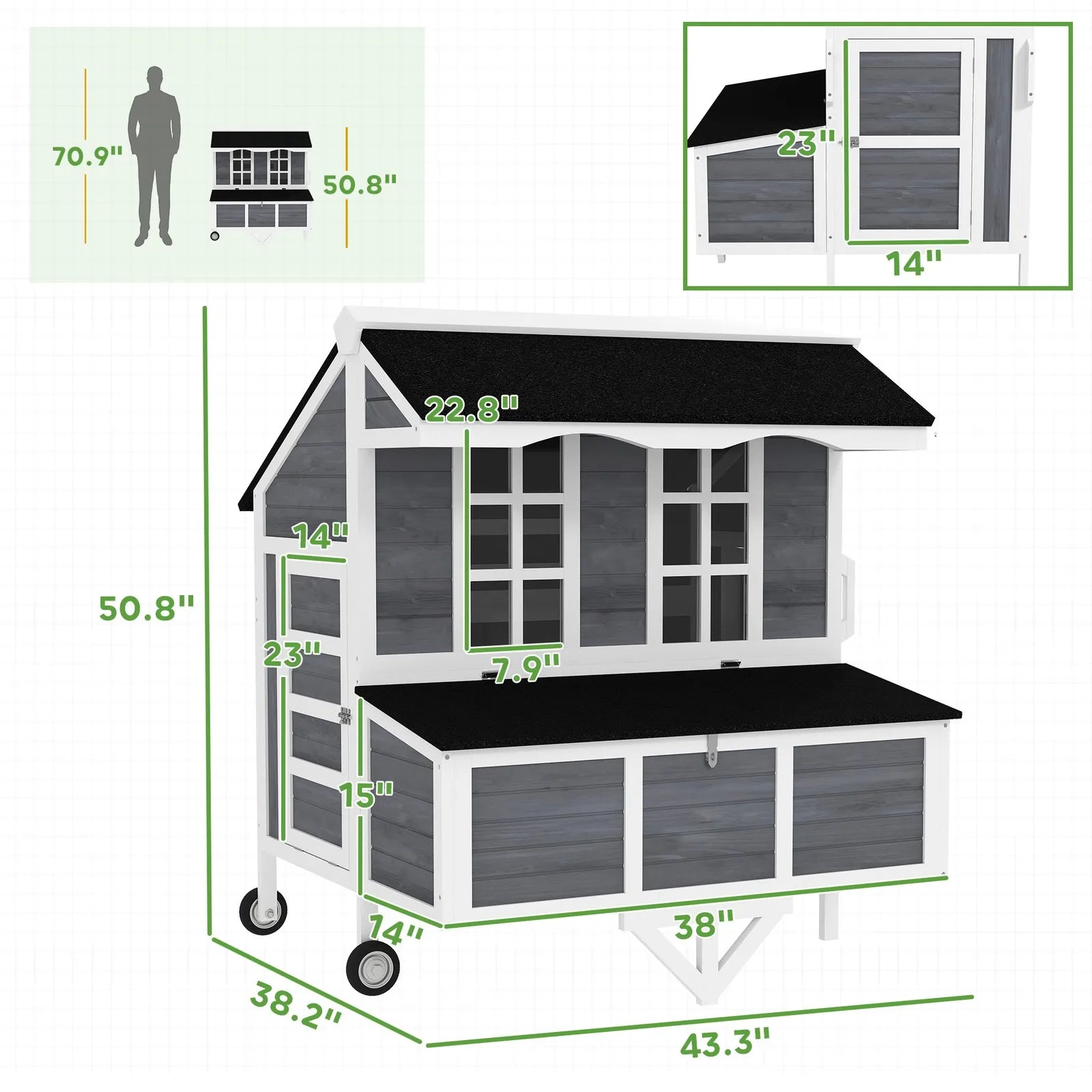
A mobile chicken coop is a coop built to be moved — usually on wheels — so your hens get a fresh patch of grass instead of wearing one square of yard down to bare dirt. They range from compact one-person movers to full coop-and-run rigs.
Every coop that rolls carries a Mobility Spec block above its spec table, holding the moving hardware its manufacturer states — the wheels, and the handle and ground clearance where those are given. Where a maker states nothing, the block says nothing: we don't estimate it from a photograph, and if the figure you need is missing we will ask the factory for it before you order.
What counts as a mobile chicken coop?
Movable, moveable, mobile, portable, rolling, on wheels, chicken tractor — keepers use all of them for roughly the same idea, and so do we, with one exception we'll come to below.
The idea underneath the vocabulary is simple. A static coop concentrates droppings and scratching in one place. Within a few weeks that place is bare, then muddy, then somewhere you'd rather not walk.
A coop that rolls spreads the same flock's impact across the whole yard: fresh grass for them, manure spread thin instead of piled deep, and no bald square to look at from the kitchen window.
The four things that decide whether a coop really moves
What makes a coop genuinely movable is not the word on the box. It's four things:
- Wheel diameter. Big wheels ride over tussocks; small ones dig in.
- Where the handle sits. A handle at one end gives you leverage; side handles mean lifting.
- What the coop weighs. Weight is the number almost nobody in this category publishes, so you will rarely find it on any listing, ours included. Tell us the coop and we will ask its manufacturer for it.
- Whether the floor is open to the grass. That one decides what the coop is actually for, and it is the whole of the next section.
Chicken tractors — and which of ours actually qualify
Here's the exception. A chicken tractor is a mobile coop with no floor. The birds stand on the grass, scratch it, manure it, and move on when you move the frame.
That open floor is the whole point: it is what makes a tractor a pasture tool rather than a shed with wheels bolted to it. A wheeled coop with a solid floor is a coop on wheels — a perfectly good thing to own, and not the same product.
So which of these are true chicken tractors? None that any manufacturer will confirm. We list them all as coops on wheels: where a maker describes the underside at all it is a droppings tray or a solid panel, and none of them states an open floor.
In practice that is the easier arrangement for most backyards — the cleaning happens at the tray instead of on your lawn, which matters a lot more in February than it does in June. If an open floor is what you specifically want, message us and we will point you at the closest thing in the range.
For the full explanation of what a tractor does to a pasture and why the floor matters, read what is a chicken tractor.
Compare the coops that move
| Coop | Fits | Overall size (L × W × H) |
|---|---|---|
| 85.6" Mobile Chicken Coop with Run | 6–8 hens | 85.6" × 40.6" × 48.2" |
| 43" Wooden Chicken Coop on Wheels | 2–4 hens | 43.3" × 38.2" × 50.8" |
| 60" Wooden Mobile Chicken Coop | 4–6 hens | 60.2" × 35.4" × 42.9" |
| PawHut 96.5" Wooden Mobile Chicken Coop | Ask us | 96.5" × 35.5" × 44.5" |
| 95.3" Portable Chicken Coop with Run | 2–4 hens | 95.3" × 31.5" × 45" |
| PawHut 59" Wooden Mobile Coop | 4–6 hens | 59.1" × 53.1" × 48.2" |
| 76" Portable Metal-Frame Coop | 3–4 hens | 76.7" × 53.8" × 36.8" |
| 85" Metal-Frame Mobile Coop with Run | 6–8 hens | 85" long |
| 95" Wooden Chicken Coop with Run | 3–6 hens | 95.3" long |
| 95" Wooden 2-Story Mobile Coop | 4–6 hens | 95" long |
| 153" Mobile Chicken Coop with Run | 6–10 hens | 153" long |
| 59" Mobile Chicken Coop with Handles | 5–8 hens | 59" long |
Capacity figures in that table are the manufacturers' ratings.
On several product pages we also show the square-foot arithmetic underneath, and where it comes out lower we give you our number too. The clearest case is one 96.5" coop-and-run, where the published run area works out at two to three birds. Both figures are on the page so you can decide.
Start with your flock size
- A small flock — start with the portable chicken coops; they're the ones a single person moves.
- A mid-size flock — the middle of this page is where you'll land.
- A larger flock — go to the large chicken coops, or the coops with runs if the flock won't be free-ranging.
The Mobility Spec — the moving hardware, in its own block
Nobody else in this category pulls the moving hardware out of the general spec table, so we built the block ourselves and put it above the specs on every coop that rolls. What it carries, when a manufacturer states it:
- Wheels — count, diameter, material
- Handle — tow bar, lift handles, side rails, none
- Ground clearance
What it almost never carries, because this category almost never prints it: the assembled weight, the lift weight at the handle, whether the floor is open to the grass, and the surface a one-person move was rated on. Those are exactly the figures you would want, and a block that guessed at them would be worth less than one that stays quiet.
So if the figure you need isn't on the page, ask us. We'll go to the manufacturer and get it in writing before you order, rather than have you read it off a photograph.
Common questions
How often should you move a mobile chicken coop?
Move it when the grass under it stops springing back. For most backyard flocks in growing season that's every two to four days, and longer in winter when the birds eat less grass and the ground is slower to recover.
The honest test is visual: if you can see the outline of last week's coop in bare earth, you left it too long.
How many hens fit in a mobile chicken coop?
The space a hen needs depends on the bird and whether it free-ranges; we walk through it in our chicken coop size guide. Bantams need less, heavy breeds more.
Every product page carries the manufacturer's figure and, where they publish enough internal dimensions, our own square-foot arithmetic beside it, so you can check the claim rather than take it.
Can one person move a chicken coop on wheels?
Often, yes. It depends on the weight, the wheel diameter and where the handle sits.
As a general rule two large wheels with a long handle at one end is the easiest layout to move solo, and four small swivel castors is the hardest on grass. Tell us your yard and who will be moving it, and we will tell you which one is the one-person option.
Do mobile coops work on uneven ground or a slope?
They work best on mown, reasonably level lawn. Small wheels bog down in soft ground, and long frames rack on a slope, which is when doors and latches stop lining up.
If your yard is genuinely rough, buy the shortest coop with the biggest wheels rather than the longest one with the best photos.
New to the idea? Why move your chicken coop covers what rotation actually does to a backyard, and what it doesn't.