

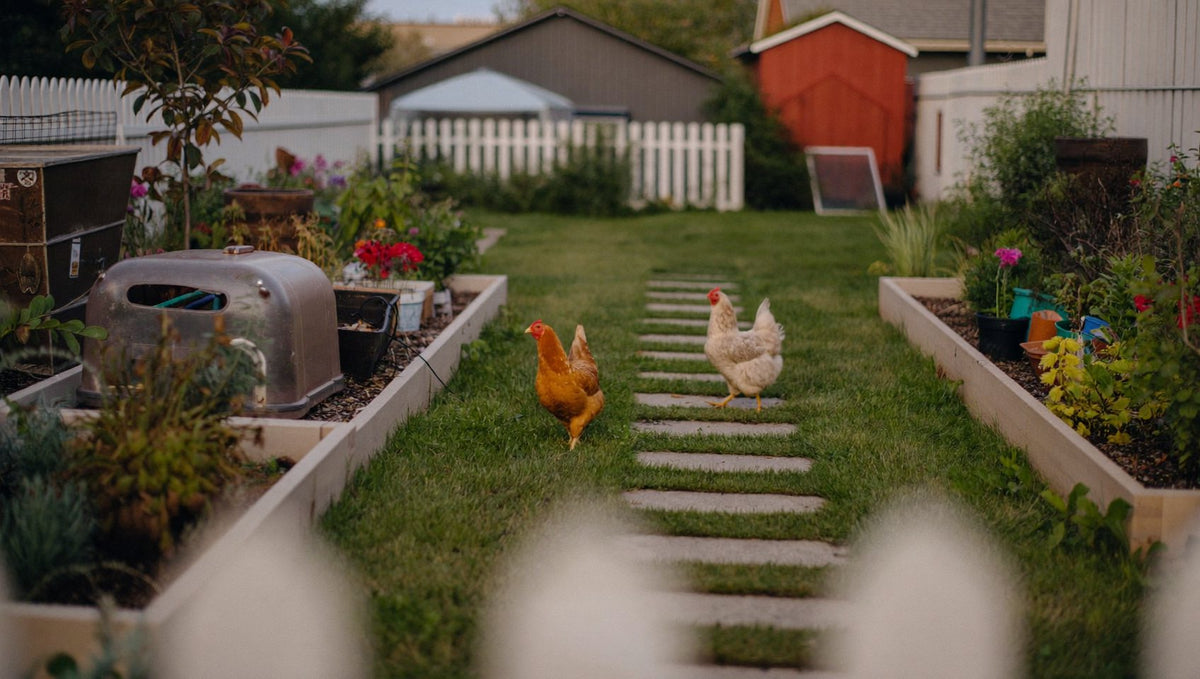
Moving a chicken coop well comes down to four habits: move it a short distance often rather than a long haul rarely, check what surface the coop's move was actually rated for, keep the path clear before you lift anything, and let the birds ride calmly inside or walk with an open-floor tractor. Do that and a move takes two minutes; skip it and you get torn lawns, strained backs, and a coop parked in the same spot since June. Here's the full routine, from cadence to the mistakes that bend axles.

How often should a coop actually move?
The ground under the run is the gauge. Grass pressed flat but still green means you're on time; yellowing means you're late; bare dirt means the rotation stopped working weeks ago. University of Minnesota Extension states the rule as a trigger rather than a schedule — a moveable house gets moved when droppings start to accumulate under it, not on a set day. No service we opened publishes a cadence in days. So read the figures here as what that trigger tends to work out to rather than as guidance: roughly every day or two for open-floor tractors, where the flock grazes the floor directly, and roughly weekly for wheeled coops with contained runs. The recovery math — why short, frequent moves regrow grass instead of killing it — is covered in why move a chicken coop at all. Check the listing of whatever you are weighing for a move rating — the surface the move was rated on, and how many people it assumed. Where one is stated, it decides how far you can take the coop in a single go; where it isn't, plan on two people until someone tells you otherwise. The mobile coops are where to start looking.
Move cadence by setup
The setup sets the pace, not the calendar. The day-figures below are ours — a description of what the ground-condition trigger tends to produce for each setup, not a schedule any extension service publishes. The third column is the part that actually decides it.
| Setup | Typical cadence | What sets the pace |
|---|---|---|
| Open-floor tractor | Every 1–2 days | The flock grazes the floor directly; grass shows it fast |
| Wheeled coop with contained run | About weekly | Droppings concentrate under the run panel |
| Wheeled coop, birds free-ranging | Every 2–3 weeks | Only the parked footprint wears |
| Stationary or walk-in | Not applicable | See mobile vs walk-in — the ground is managed, not rotated |
Where should the birds be during the move?
For the usual ten-foot roll: inside, calm, ideally in the early morning before the pop door opens. The coop is their safe box, and a smooth short move barely registers. Open-floor tractors work the opposite way — the flock stays on the ground and strolls along as the frame slides slowly past them. What you don't do is move anything mid-flap: a panicked bird underfoot or under a skid is how injuries happen on moving day.
The mechanics of a clean one-person move
Latch every door and lid first — an unlatched nest-box lid will swing open mid-move, and that is what tears a hinge out of its screws. Take the waterer out or empty it; free water is weight that sloshes. Then lift from the handle end with your legs, feel the wheels engage before you commit, and push rather than drag wherever the ground allows. Small steering corrections beat big swings, which is also how you keep wheel axles straight on a coop that'll make hundreds of moves in its life.
What surface can you move a coop on?
Firm, level ground — and the further your route gets from that, the more the wheels decide whether the move happens at all. Slopes multiply effective weight, soft wet ground swallows small wheels, and gravel chews them. If your yard runs to any of those, settle the moving question before you buy rather than after: give us the route — its slope, its surface, its narrowest gate — and we will ask the maker what those wheels and that handle were built to cross. It's the difference between a coop you rotate and a coop you park. Browse the mobile coops with your worst stretch of yard in mind, not your best.
Move cadence set? Take 10% off the coop that'll do the moving. TAKE 10% OFF
Moving-day checklist
A clean move is the same six habits in the same order every time — secure the coop, clear the path, settle the birds, then lift, roll, and re-level at the new spot. The list below is the whole routine.
- Latch doors, nest lids, and ramps
- Remove or empty the waterer and any hanging feeder
- Walk the path once: hoses, toys, molehills, soft spots
- Birds calm inside (wheeled) or on the ground (open-floor tractor)
- Lift with legs, engage wheels, push smoothly
- Re-level on arrival and re-check the pop door and ramp angle
What if the coop was never meant to move?
Stationary and walk-in coops relocate by disassembly or skids, and it's a project measured in hours with helpers, not minutes alone. If you're facing that move more than once — following the shade through summer, resting a paddock — the honest answer is that you bought the wrong category, and mobile vs walk-in walks through which one your setup actually calls for.
The mistakes that cost coops and backs
Long rare hauls instead of short frequent rolls. Dragging with wheels half-engaged, which bends axles. Parking across a slope so doors swing and eggs roll. Moving right after rain on soft turf. And the quiet one: never re-checking that the nest boxes sit level after the move, then wondering why eggs cluster in one corner and crack.
Slopes, gates, and tight yards
Plan the route like you'd plan for a wheelbarrow you can't tip. Cross slopes rather than running straight down them, so the coop's weight never gets ahead of you. Measure the narrowest gate before buying, not after, and hold that figure against the coop's width rather than its length — a listing that gives an overall length and nothing across has not answered the gate question, and that is worth asking before you order rather than finding out at the gatepost. In tight yards, a three-point turn with a coop is real: push the handle end past the corner, swing, and back it in, rather than muscling it sideways, which is what bends axles and tears turf.
When the wheels won't roll
Soft ground after rain is the usual culprit. Don't drag — dragging a stalled coop is how frames rack and wheels shear. Lay a pair of boards ahead of the wheels as a temporary track, roll onto them, and repeat; two boards leapfrogged will cross a surprisingly long soft patch. If one wheel spins in a hollow, lift that corner slightly by the frame while a second person pushes. And if moves keep stalling in the same spot, that patch of yard is telling you something about the route, not the coop.
A habit worth stealing from keepers on heavy soil: leave the two boards leaning against the coop itself, not in the shed. The move that goes wrong is always the one where the rescue kit is fifty yards away in the rain, and a coop that carries its own track never gets truly stuck.
Cadence through the seasons
Spring grass recovers in days, so rotations tighten. High summer slows recovery; give patches longer or the lawn browns out in coop-shaped rectangles. Autumn is prime rotation weather. In frozen or saturated winter conditions, park the coop on a sacrificial patch — the winter guide covers keeping the parked coop dry — and start rotating again when the ground firms. The lighter portable coops are the easiest to keep moving year-round, which is a real argument for them in wet climates.
Further reading: UNH Extension's egg-production primer covers the flock-care fundamentals a moving routine supports.
Two-person carries and coops without wheels
Handled portable coops move like a stretcher: one person per end, lift with legs on a count, and walk the route you already cleared. Keep the coop level — a tilted carry sends eggs, feeder grit, and unimpressed hens sliding to one wall. For anything heavier without wheels, lifting straps under the frame beat gripping the panels, which were never designed as handles. And know when to stop: if a dry-run lift tells you the coop wants three people, it isn't a two-person coop that day. The spec table's assembled-weight line, where the manufacturer provides one, is the number to consult before your back consults you.
Teaching the flock the routine
Chickens learn moving day faster than most keepers expect. The first few moves, expect startled clucking and a hen or two pacing the wrong wall; by the second week, a flock that gets moved on schedule treats the rolling coop as weather. You can speed the lesson up: move at the same time of day, scatter a handful of scratch on the fresh patch as the coop settles, and the flock starts associating the move with the best forage of the day. Open-floor tractor flocks learn to walk with the frame the same way — slow first moves, a treat line on the new grass, and within days they drift along with it like it was their idea. New birds added to an experienced flock pick the routine up from the veterans, which is one more quiet argument for moving little and often instead of rarely and far.
The move trigger — droppings under the house, not a day on the calendar — is published guidance, named and linked below. The lifting, steering and route-clearing on this page is working practice rather than extension guidance, and is written as such so you can tell the two apart.
Sources: University of Minnesota Extension, "Raising chickens for eggs" — accessed August 22, 2026 — University of New Hampshire Extension, "Producing Your Own Eggs" — accessed August 22, 2026.
Last reviewed: 22 August 2026
Frequently asked questions
How often should you move a chicken coop?
Read the ground, not the calendar: move when the grass under the run is flattened but not destroyed, usually every one to three days for an open-floor tractor and roughly weekly for a wheeled coop with a contained run. Waiting until the patch is bare defeats the point of a mobile coop.
Can you move a coop with the chickens inside?
For a short roll to the next patch, yes — calm birds ride fine, and doing it early, before you open the pop door, is the easiest routine. Never move a coop during a panic, and for open-floor tractors, move slowly so the flock walks along with it.
Is moving a coop a one-person or two-person job?
It depends on the model. Where a maker states the surface a one-person move was rated on, that line settles it; where none is stated, ask first and we will source the answer from its maker. On the rated surface, one adult; on slopes, soft ground, or anything the spec doesn't cover, use two.
Can you move a chicken coop in winter?
Yes, and rotation still helps the ground, but frozen or saturated lawns tear more easily and wheels bite worse. Many keepers park the coop on a sacrificial patch for the worst weeks and resume rotation when the ground firms up.